


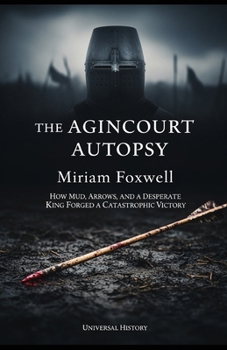
The Agincourt Autopsy: How Mud, Arrows, and a Desperate King Forged a Catastrophic Victory

The Agincourt Autopsy moves beyond the Shakespearean myth to present a radical new interpretation of the famous battle. Synthesizing modern forensic evidence with a deep reading of medieval chronicles, this book reconstructs the 1415 campaign not as a tale of heroic underdogs, but as a grim case study in tactical brilliance and catastrophic failure. The analysis begins with the bones of the archers themselves, whose skeletal deformities reveal the immense physical sacrifice required to wield the war bow.
This book argues that the English victory was predetermined by a series of calculated decisions and brutal realities that have long been obscured by romance. It was a victory forged by a king desperate to legitimize his father's usurpation, a technology designed for systemic disruption, and a battlefield that became a weapon in itself.
This forensic reconstruction reveals: Why Henry V's campaign was a political gamble to provoke a single battle, deliberately marching his army toward Calais to turn it into an irresistible target.How the longbow's true power was its rapid rate of fire, creating a dense 'beaten zone' to cripple the unarmored horses of the French knights and break their charge.The way the battlefield's geography-a narrow, muddy corridor-negated French numbers and catastrophically exhausted their men-at-arms before combat was joined.How Henry's order to kill the prisoners was a brutal tactical decision, sacrificing the economic value of ransom to neutralize a perceived threat from his rear.The result is a visceral and definitive account of how mud, arrows, and a desperate king's strategy dismantled the French army, leading to a pyrrhic victory that would politically decapitate a generation of their leadership.
Related Subjects
HistoryCustomer Reviews
ThriftBooks ® and the ThriftBooks ® logo are registered trademarks of Thrift Books Global, LLC
