


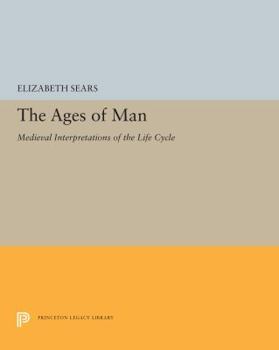
The Ages of Man: Medieval Interpretations of the Life Cycle (Princeton Legacy Library, 5447)
No Customer Reviews

Select Format
Select Condition 
Book Overview
The book description for the previously published "The Ages of Man: Medieval Interpretations of the Life Cycle" is not yet available.
Format:Hardcover
Language:English
ISBN:0691040370
ISBN13:9780691040370
Release Date:December 1986
Publisher:Princeton University Press
Length:318 Pages
Weight:1.00 lbs.
Dimensions:10.5" x 1.0" x 8.0"
Customer Reviews
0 rating
Copyright © 2026 Thriftbooks.com
Terms of Use | Privacy Policy | Do Not Sell/Share My Personal Information | Cookie Policy | Cookie Preferences | Accessibility Statement
ThriftBooks ® and the ThriftBooks ® logo are registered trademarks of Thrift Books Global, LLC
ThriftBooks ® and the ThriftBooks ® logo are registered trademarks of Thrift Books Global, LLC
