


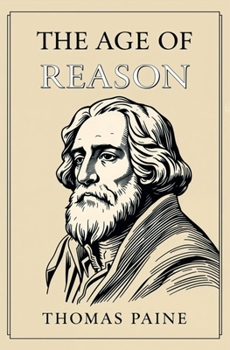
The Age of Reason

This influential deistic treatise examines religion through the principles of reason, challenging established Christian doctrine and the authority of revealed scripture. Written during an era of political and religious upheaval surrounding the French Revolution, the work also reflects the broader eighteenth-century debate over faith, revelation, and natural religion.
Paine questions the authenticity and divine inspiration attributed to the Bible, rejects miracles as evidence of revelation, and criticizes the political power and institutional corruption of the Christian Church. At the same time, he rejects atheism, affirming belief in a creator-God accessible through reason and the natural world.
By presenting established deistic arguments in an accessible and irreverent style, Paine brought them to a wider audience and influenced later freethinkers. The work remains significant for its forceful examination of religious authority, reason, and belief.
Customer Reviews
ThriftBooks ® and the ThriftBooks ® logo are registered trademarks of Thrift Books Global, LLC
