


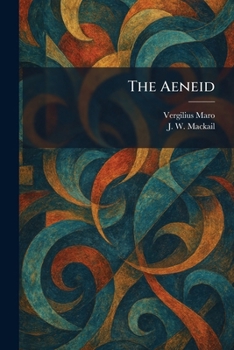
The Aeneid

"The Aeneid" is one of the most significant works of Western literature, a monumental epic poem composed by the Roman poet Virgil. It tells the legendary story of Aeneas, a Trojan hero who escaped the sack of his city to travel to Italy, where he became the ancestor of the Roman people. The narrative follows Aeneas's arduous journey across the Mediterranean-including his tragic encounter with Queen Dido of Carthage-and his eventual arrival on the Italian peninsula, where he must lead his people through a series of brutal wars to establish their new home.
This masterpiece of Latin literature explores profound themes of duty, fate, and the founding of an empire. Virgil's verse is celebrated for its technical mastery, emotional resonance, and its enduring influence on subsequent European literature and art. This edition, edited by J. W. Mackail, presents this foundational text of classical antiquity, capturing the grandeur of the Roman spirit and the human cost of destiny. As a cornerstone of the Western canon, "The Aeneid" remains essential reading for anyone interested in the origins of Rome, the nature of heroism, and the timeless power of epic storytelling.
This work has been selected by scholars as being culturally important, and is part of the knowledge base of civilization as we know it. This work was reproduced from the original artifact, and remains as true to the original work as possible. Therefore, you may see the original copyright references, library stamps (as most of these works have been housed in our most important libraries around the world), and other notations in the work.
This work is in the public domain in the United States of America, and possibly other nations. Within the United States, you may freely copy and distribute this work, as no entity (individual or corporate) has a copyright on the body of the work.
As a reproduction of a historical artifact, this work may contain missing or blurred pages, poor pictures, errant marks, etc. Scholars believe, and we concur, that this work is important enough to be preserved, reproduced, and made generally available to the public. We appreciate your support of the preservation process, and thank you for being an important part of keeping this knowledge alive and relevant.
Customer Reviews
ThriftBooks ® and the ThriftBooks ® logo are registered trademarks of Thrift Books Global, LLC
