


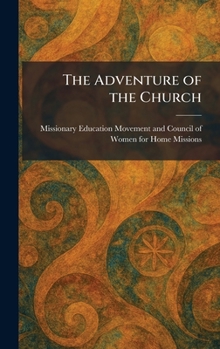
The Adventure of the Church

"The Adventure of the Church" is an insightful exploration of the expansion and vitality of the Christian faith in the early twentieth century. Written by Samuel McCrea Cavert, a prominent figure in religious leadership, the work frames the history and mission of the church as a dynamic, unfolding narrative of global outreach and spiritual commitment. The text delves into the evolving challenges and opportunities facing religious institutions as they sought to address contemporary social issues and spread their message across diverse cultures.
By examining the church's role through the lens of adventure, Cavert emphasizes the courage and vision required for missionary work and communal service. The book provides a historical perspective on the development of interdenominational cooperation and the missionary spirit, highlighting the efforts to create a more unified and impactful religious presence in a rapidly changing world. It serves as both a reflection on the progress of the faith and a programmatic guide for future ministry, making it a valuable resource for those interested in church history, theology, and missiology. Readers will find a compelling account of how the church sought to navigate the complexities of modernity while remaining dedicated to its core spiritual and humanitarian goals.
This work has been selected by scholars as being culturally important, and is part of the knowledge base of civilization as we know it. This work was reproduced from the original artifact, and remains as true to the original work as possible. Therefore, you may see the original copyright references, library stamps (as most of these works have been housed in our most important libraries around the world), and other notations in the work.
This work is in the public domain in the United States of America, and possibly other nations. Within the United States, you may freely copy and distribute this work, as no entity (individual or corporate) has a copyright on the body of the work.
As a reproduction of a historical artifact, this work may contain missing or blurred pages, poor pictures, errant marks, etc. Scholars believe, and we concur, that this work is important enough to be preserved, reproduced, and made generally available to the public. We appreciate your support of the preservation process, and thank you for being an important part of keeping this knowledge alive and relevant.
Customer Reviews
ThriftBooks ® and the ThriftBooks ® logo are registered trademarks of Thrift Books Global, LLC
