


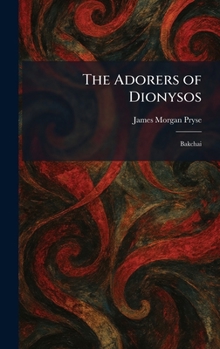
The Adorers of Dionysos: Bakchai

"The Adorers of Dionysos (Bakchai)" is a profound exploration of Euripides' classic tragedy, viewed through the lens of esoteric mysticism and spiritual philosophy. James Morgan Pryse provides an insightful translation and commentary on "The Bacchae", delving into the symbolic and ritualistic significance of the Dionysian mysteries. The work examines the tension between the rational, ordered mind and the ecstatic, primal forces of nature embodied by the god Dionysos.
Pryse's interpretation highlights the initiation rites and the deep psychological transformation of the characters, positioning the play not merely as a dramatic performance but as a sacred text of ancient spiritual practice. This work serves as an essential resource for those interested in Greek mythology, the history of drama, and the hidden currents of occult philosophy that inform classical literature. By focusing on the inner meaning of the text, "The Adorers of Dionysos (Bakchai)" offers readers a unique perspective on the power of the divine and the enduring influence of the Greek spirit on human consciousness. It remains a vital contribution to the study of ancient religious drama and mystical tradition.
This work has been selected by scholars as being culturally important, and is part of the knowledge base of civilization as we know it. This work was reproduced from the original artifact, and remains as true to the original work as possible. Therefore, you may see the original copyright references, library stamps (as most of these works have been housed in our most important libraries around the world), and other notations in the work.
This work is in the public domain in the United States of America, and possibly other nations. Within the United States, you may freely copy and distribute this work, as no entity (individual or corporate) has a copyright on the body of the work.
As a reproduction of a historical artifact, this work may contain missing or blurred pages, poor pictures, errant marks, etc. Scholars believe, and we concur, that this work is important enough to be preserved, reproduced, and made generally available to the public. We appreciate your support of the preservation process, and thank you for being an important part of keeping this knowledge alive and relevant.
Customer Reviews
ThriftBooks® and the ThriftBooks® logo are registered trademarks of Thrift Books Global, LLC
