


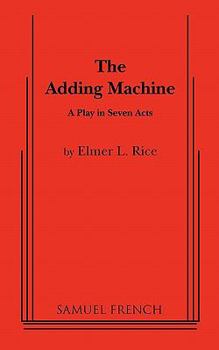
The Adding Machine: A Play in Seven Acts

Select Format
Select Condition 
Book Overview
Drama
Characters: 14 male 9 female
5 interior scenes and 2 exterior scenes
This constantly interesting play shows in outline the life history and in its later scenes the death history of Mr. Zero a cog in the vast machine of modern business.
Format:Paperback
Language:English
ISBN:0573605084
ISBN13:9780573605086
Release Date:January 2011
Publisher:Concord Theatricals
Length:156 Pages
Weight:0.36 lbs.
Dimensions:0.3" x 5.0" x 8.0"
Customer Reviews
2 ratings
Going "Postal" in 1923.
Published by Thriftbooks.com User , 19 years ago
The Adding Machine was first produced on stage in 1923 and Elmer Rice wrote the Pulitzer Prize for "Street Scene". The Adding Machine is an eye opening take on the soul of a man, who for 25 years adds up figures in the sales department, never missed a day of work and gets canned for technology, an adding machine. The play is a satirical take on corporation, the evolution of man as the slave, and the afterlife. The man and his family or acquaintances are known as numbers, and this man, Mr. Zero, named for the bottom of the work chain. He is married to Mrs. Zero, a nag who is belittling, degrading and clearly in dismay with his demeaning status or lack of ambition. It begins with Mr. Zero, who does nothing but add figures all day; and imagines his boss giving him a raise. He works across from Miss Devore, who dreams of loving him. They carry on one-sided conversations with each other. Mr. Zero degrades and disrespects her while she wishes she were dead without him. He doesn't get the raise, but gets canned, and he goes "postal" and kills the boss. From there, the scenes change from the office to the jail, where he is the subject a tour group as an animal in a cage. Executed, we next see him in the graveyard where he meets Shrdlu, who killed his mother. Together they expect the worst as sinners in hell, but are somehow transformed to a place like heaven, the Elysian Fields considered the final resting place of the souls of the heroic and the virtuous. Mr. Zero then encounters Miss Devore, his workmate, who "blew out the gas" after he died. Then, Mr. Zero is offered a chance to go back to Earth to do it all over again. He learns that the poor souls who arrive there are simply sent back to work; they are used over and over again. It is the end, where we learn through insightful dialogue the evolution of man as the slave in the corporate world. Interesting!.....MzRizz. NOTE:!!! The original play has 8 scenes, and what has been excluded from some performances is the Jail Scene.
Chilling
Published by Thriftbooks.com User , 26 years ago
The Adding Machine by Elmer Rice is regard by many as the first play to bring German expressionism to the American theatre. The story follows the emotional struggle of the characters rather than the plot (in fact most of the major events of the play occur off stage) until he wrote The Adding Machine Rice was a master of the melodrama, but The Adding Machine's distinctively modern feel and disturbing message set it apart from his other plays. It includes a erie dinner scene where six identical couples speak a hyper active version of small talk. this play exposes common place vulgarities and everyday injustice.
Copyright © 2026 Thriftbooks.com
Terms of Use | Privacy Policy | Do Not Sell/Share My Personal Information | Cookie Notice | Cookie Preferences | Accessibility Statement
ThriftBooks ® and the ThriftBooks ® logo are registered trademarks of Thrift Books Global, LLC
ThriftBooks ® and the ThriftBooks ® logo are registered trademarks of Thrift Books Global, LLC
