


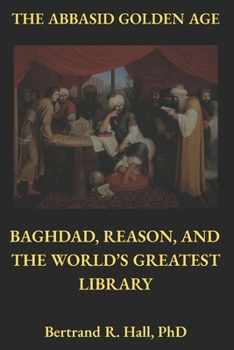
The Abbasid Golden Age: Baghdad, Reason, and the World's Greatest Library

In 762 CE, a caliph broke ground on a circular city on the Tigris and called it the City of Peace. Within a generation it was the largest city on earth. Within two generations it had become something the world had never seen: a state that treated the pursuit of knowledge as a matter of sovereign policy.
What followed was two centuries in which the accumulated learning of Greece, Persia, and India was systematically translated into Arabic, organized, extended, and transformed. The physicians of Baghdad distinguished smallpox from measles and built the world's first teaching hospitals. The mathematicians invented algebra and transmitted the numeral system that the modern world still uses. The astronomers measured the circumference of the earth to within half a percent and named the stars in a language that survives in every observatory on the planet. The philosophers asked whether reason and revelation could coexist - and discovered that the answer was more complicated than either side wanted.
The Abbasid Golden Age is the story of how this happened: the caliphs who funded it, the translators who made it possible, the scholars who extended it, and the structural forces that ended it. It is a story about what becomes possible when a civilization chooses curiosity over certainty, synthesis over purity, and the library over the sword - and about what is lost when those choices are reversed.
The ink of their books still runs through the foundations of modern science. The star names are still there. The algebra is still there. Baghdad is gone. The knowledge survived.
Related Subjects
HistoryCustomer Reviews
ThriftBooks ® and the ThriftBooks ® logo are registered trademarks of Thrift Books Global, LLC
