


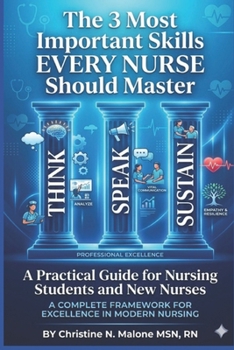
"The 3 Most Important Skills Every Nurse Should Master": A Practical Guide for Nursing Students and New Nurses

You passed nursing school. You earned your license. You studied countless hours and memorized everything they told you to learn.
So why do you still feel completely unprepared for what's expected of you?
If you're a nursing student or new graduate feeling overwhelmed by the massive gap between classroom theory and clinical reality, you're not alone, and you're not failing.
The truth is simple but rarely acknowledged: Nursing school taught you WHAT to do, but not HOW to think, communicate, or sustain yourself in this demanding profession.
The clinical judgment that catches deteriorating patients before crisis hits? Barely mentioned.
The communication skills that build trust with physicians and families? Touched on, never mastered.
The emotional resilience that prevents burnout and allows a decades-long career? Left for you to figure out on your own.
These aren't minor gaps. These are the skills that actually determine whether you thrive or struggle, whether you love this profession or leave it within five years.
THE THREE SKILLS THAT CHANGE EVERYTHING
After 36 years of clinical nursing and countless hours mentoring new nurses, Christine N. Malone has identified the three fundamental competencies that separate nurses who flourish from those who flounder:
SKILL #1: Clinical Competence Paired with Critical Thinking
This isn't about memorizing more facts or perfecting technical procedures. It's about developing the judgment that allows you to work through uncertainty, recognize patterns others miss, prioritize effectively in chaos, and make sound decisions when situations don't match the textbook.
It's the difference between a nurse who efficiently completes tasks and a nurse who actually thinks-who notices the subtle respiratory changes that signal impending crisis, who connects dots between symptoms that seem unrelated, who prevents complications before they develop, and who advocates effectively because their clinical reasoning is sound.
SKILL #2: Effective Communication and Collaboration
Your clinical knowledge means nothing if you can't communicate it clearly. Whether you're talking to an anxious patient, a grieving family member, an intimidating physician, or a difficult colleague, how you communicate determines patient safety, your professional reputation, and your ability to function as part of a healthcare team.
This skill encompasses knowing exactly what to say when calling a physician at 3 AM about concerning vital signs, delivering difficult news with compassion while maintaining professional composure, documenting in ways that protect both you and your patients legally, navigating conflict without damaging relationships, and advocating for patients even when it feels uncomfortable or risky.
SKILL #3: Professional Confidence Grounded in Emotional Resilience
All the clinical knowledge and communication skills in the world won't matter if you burn out in your first year. Nursing is emotionally demanding, physically exhausting, and will test your limits repeatedly. Without resilience, the ability to bend without breaking, to learn from mistakes without being destroyed by them, to maintain compassion without absorbing everyone's trauma, you won't last.
Visit: CaringNurses101.com/3-skillsbook to receive your FREE PDF - "5 Communication Scripts Every Nurse Needs"
Christine N. Malone, MSN, RN Author Nursing Coach Mentor
Customer Reviews
ThriftBooks ® and the ThriftBooks ® logo are registered trademarks of Thrift Books Global, LLC
