
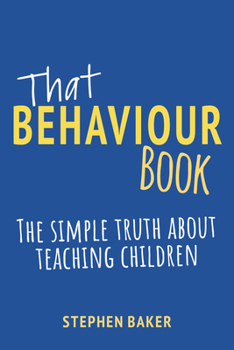
What kind of teacher are you? What values, beliefs and principles do successful teachers have and how do they sustain these in the face of challenging pupil behaviour?
In this timely book, Stephen Baker contends that rigid punishment systems weaponize young people's defiance against them and that punishment doesn't work. He believes that teachers need to take responsibility for behaviour and to lead it, not just 'manage' it, that we need to love the kids (even if we don't like them), that children are people, thatweare an event intheirlives, and that teaching is a relationship-based activity.
With each chapter followed by engaging 'takeaway tasks', That Behaviour Bookwill allow teachers to rapidly improve both their practice and their relationships with pupils and classes. The book looks at the values that will sustain you as a teacher, how routines will help you teach better and what 'positive expectations' really mean, making child-centred relational practice easy to apply in the classroom. Teachers will have a more realistic appreciation of their own situation and of the context in which they teach. In short, this book will help teachers learn how to get the very best out of their pupils.
That Behaviour Bookis an essential guide for both the beginner and the more experienced teacher. Its unique tone makes it an indispensable companion for the busy teacher, providing a sense of connection, challenge and reassurance all at once. Stephen Baker's anecdotes, drawn from his years as a pupil, teacher and trainer pack an emotional punch and are often hilarious.
Suitable for all teachers.
;Written by Stephen Baker, That Behaviour Book: The simple truth about teaching childrenis an essential book for every teacher, providing an engaging and unique mix of anecdotes, practical strategies and moral imperatives for successful and child-centred behaviour management.
;'Allowing the teachers to take control of behaviour' is a wonderful summary as Steve looks back and advises on how to teach Wade Booley as his younger self (without taking him around the back of the Portakabin, Kes-style). This book helps establish routines and helps build relationships for ECTs and experienced teachers. It is easy to read with a plethora of simple ideas, told in a humerous manner with examples we can all relate to. The takeaways are a perfect ending to each chapter, but the cherry on the cake are the 'Now Try This' reflective opportunities which allow teachers to make those positive changes. An exceptional read.
Chris Dyson
;Through visiting thousands of lessons, Steve has a special talent for spotting those moments of interaction between adult and youngsters that are catalysts for relationships breaking down and the inevitable onset of crisis. That Behaviour Book looks at those moments, identifies the issues and provides sensible solutions that have proven to work in many schools. This book is an essential read for all adults working with youngsters.
Mark Ayers
;This book will challenge you to confront yourself. Do not read it unless you are ready to go on a journey to being a better teacher and a better human being. Whilst this book provides so many valuable tools and strategies, it is so much more than a 'how to ... what to do if' book. Steve is clear that our biggest asset in the classroom is our willingness to see children as fellow human beings. As Steve eloquently puts it, 'Your job as a teacher is to help young people build their futures, to assist them to thrive and achieve their potential.' I have long been suspicious of the so-called 'zero tolerance' approach to behaviour. How can we say we love and value our children and have developed sophisticated policies and protocols to safeguard our children from harm, yet say we have zero tolerance of behaviour, which may well be communicating distress, trauma, fear and distrust? Perhaps the most
