


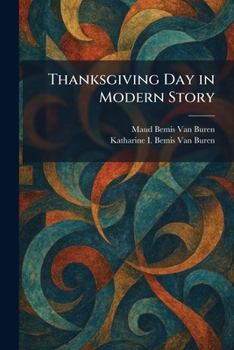
Thanksgiving Day in Modern Story

"Thanksgiving Day in Modern Story" is a curated collection of short narratives that capture the essence, traditions, and diverse experiences of the quintessential American holiday. Compiled by Maud Van Buren and Katharine I. Bemis, this anthology brings together a variety of voices to explore the multifaceted nature of Thanksgiving-ranging from the warmth of family reunions to the quiet dignity of personal reflection and gratitude.
The stories within this volume offer a snapshot of early 20th-century American life, illustrating how the holiday served as a cornerstone of social and domestic culture. The contributions vary in tone, encompassing poignant dramas, lighthearted tales, and evocative sketches that highlight the universal themes of hospitality and community. Each piece contributes to a broader understanding of how the holiday evolved in the modern consciousness, moving beyond historical origin stories to address the contemporary realities of the time.
As a literary celebration of the season, "Thanksgiving Day in Modern Story" remains a valuable resource for readers seeking to understand the cultural and emotional landscape of the 1920s. It provides a timeless look at the enduring human impulse to gather, give thanks, and find meaning in shared heritage and seasonal rituals.
This work has been selected by scholars as being culturally important, and is part of the knowledge base of civilization as we know it. This work was reproduced from the original artifact, and remains as true to the original work as possible. Therefore, you may see the original copyright references, library stamps (as most of these works have been housed in our most important libraries around the world), and other notations in the work.
This work is in the public domain in the United States of America, and possibly other nations. Within the United States, you may freely copy and distribute this work, as no entity (individual or corporate) has a copyright on the body of the work.
As a reproduction of a historical artifact, this work may contain missing or blurred pages, poor pictures, errant marks, etc. Scholars believe, and we concur, that this work is important enough to be preserved, reproduced, and made generally available to the public. We appreciate your support of the preservation process, and thank you for being an important part of keeping this knowledge alive and relevant.
Customer Reviews
ThriftBooks ® and the ThriftBooks ® logo are registered trademarks of Thrift Books Global, LLC
