


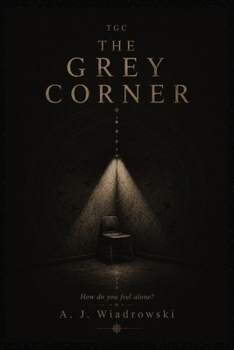
TGC: The Grey Corner: Book 2 of the Continuity Constellation

Elise Kirby studies how young children see the world. In a quiet observation room at a Melbourne university, she watches them draw their families and their houses and their pets, and then, one at a time, in different rooms on different days, they stop and turn and look at the same place. The corner where two walls meet the ceiling. Each of them has a different way of describing what is there. A standing place. Where the room goes quiet. The darker spot.
Every child grows out of it. Everyone does. We call it growing up, and what we really learn is how to stop looking.
Elise is good at her work, and she has a dozen reasonable explanations for the pattern in her data. Then she starts to see the corner too. As her certainty comes apart, the life she has built with her partner Nina, and the tight circle of women who hold them all together, comes apart with it. The more Elise understands, the less safe understanding becomes, and the harder it is to look away from the one thing she was never meant to see.
A slow-burn descent into psychological horror, set in contemporary Melbourne, with a queer woman at its centre and a question at its core you will not be able to unhear: why is it grey, and what happens when you finally look.
For readers of Shirley Jackson, Paul Tremblay, and Catriona Ward. A creeping, dread-soaked horror novel built on the most unsettling idea of all: that the world is full of things we have trained ourselves, since childhood, not to see, and that the only thing more dangerous than not seeing them is finally looking.
Customer Reviews
ThriftBooks ® and the ThriftBooks ® logo are registered trademarks of Thrift Books Global, LLC
