


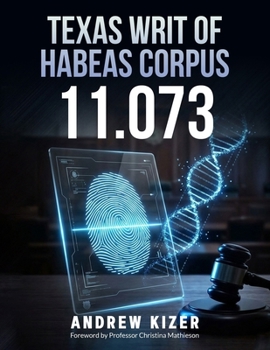
Texas Writ of Habeas Corpus: 11.073: Revised Edition

In Texas Writ of Habeas Corpus: 11.073, Andrew Kizer provides a comprehensive legal and practical guide to understanding, litigating, and reforming Texas's changed-science statute.
Drawing from the full body of Court of Criminal Appeals decisions, this book analyzes how Article 11.073 has evolved from legislative reform to a highly structured procedural mechanism shaped by judicial interpretation.
Inside, you'll find:
A detailed legislative history of Article 11.073Clause-by-clause analysis of the statute's architectureIn-depth examination of leading cases including Robbins, Henderson, Chaney, Roark, and RobersonStrategic guidance for pleading, subsequent writ navigation, and evidentiary developmentAnalysis of the "changed science" requirement and admissibility standardsPractical discussion of false-evidence, actual innocence, and plea-bargain interplayA comprehensive A-Z reference table of 11.073 casesExpert witness resource guidance for post-conviction litigationProposed statutory reforms aimed at strengthening the integrity of the statuteWritten for attorneys, judges, lawmakers, innocence advocates, and incarcerated litigants, this work serves both as a litigation manual and a critical examination of how scientific evolution challenges the finality of criminal judgments.
As scientific understanding advances, courts are forced to confront a difficult question: can a system built on precedent adapt to evolving knowledge? This book explores how Texas is answering that question - and what remains unresolved.
100% of proceeds from this book are donated to the Innocence Project of Texas.
Related Subjects
LawCustomer Reviews
ThriftBooks ® and the ThriftBooks ® logo are registered trademarks of Thrift Books Global, LLC
