


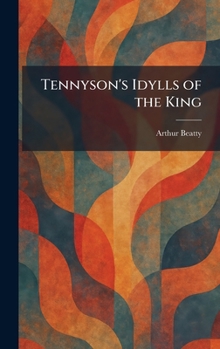
Tennyson's Idylls of the King

"Tennyson's Idylls of the King" is a masterful cycle of narrative poems by the Poet Laureate Alfred, Lord Tennyson, which retells the legendary stories of King Arthur, his noble knights, and the tragic fall of the Round Table. Through twelve interconnected idylls, the work explores the rise of Arthur's kingdom, the quest for the Holy Grail, and the devastating impact of betrayal and moral decay on the ideal of Camelot.
Tennyson's epic treatment of the Arthurian mythos serves as a profound meditation on the struggle between spiritual aspirations and human fallibility. The poems are celebrated for their lyrical intensity, vivid imagery, and allegorical resonance, capturing the virtues of chivalry alongside the complexities of love, duty, and honor. From the arrival of Arthur to the passing of the king, the narrative traces the arc of a civilization built on high ideals and its ultimate collapse into chaos.
As a cornerstone of Victorian literature, "Tennyson's Idylls of the King" offers a timeless reflection on the human condition and the enduring power of legend. This work remains a vital contribution to the English literary canon, essential for readers interested in epic poetry, medieval folklore, and the development of the Arthurian tradition.
This work has been selected by scholars as being culturally important, and is part of the knowledge base of civilization as we know it. This work was reproduced from the original artifact, and remains as true to the original work as possible. Therefore, you may see the original copyright references, library stamps (as most of these works have been housed in our most important libraries around the world), and other notations in the work.
This work is in the public domain in the United States of America, and possibly other nations. Within the United States, you may freely copy and distribute this work, as no entity (individual or corporate) has a copyright on the body of the work.
As a reproduction of a historical artifact, this work may contain missing or blurred pages, poor pictures, errant marks, etc. Scholars believe, and we concur, that this work is important enough to be preserved, reproduced, and made generally available to the public. We appreciate your support of the preservation process, and thank you for being an important part of keeping this knowledge alive and relevant.
Customer Reviews
ThriftBooks ® and the ThriftBooks ® logo are registered trademarks of Thrift Books Global, LLC
