


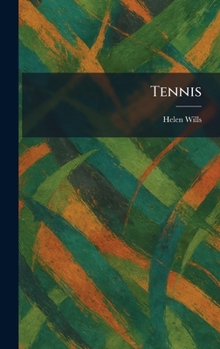
Tennis

"Tennis" is a definitive exploration of the sport by one of its most legendary figures, Helen Wills. As a multi-time champion whose dominance defined an era, Wills provides an authoritative look at the technical, mental, and physical demands of the game. The work serves as both an instructional guide and a personal reflection on the evolution of competitive tennis during the early 20th century.
Throughout the book, Wills breaks down the fundamental strokes-from the serve and the forehand to the nuances of net play-offering insights that remain relevant for enthusiasts and students of the sport. Beyond mere mechanics, she delves into the psychology of competition, the importance of footwork, and the tactical strategy required to succeed at the highest levels of international play.
Rich with the perspective of an athlete who achieved unparalleled success, "Tennis" captures the grace and athleticism that transformed the sport into a global phenomenon. It stands as a significant historical document in the world of athletics, chronicling the insights of a pioneer who helped shape the modern game and remains an essential read for anyone interested in the heritage of racket sports.
This work has been selected by scholars as being culturally important, and is part of the knowledge base of civilization as we know it. This work was reproduced from the original artifact, and remains as true to the original work as possible. Therefore, you may see the original copyright references, library stamps (as most of these works have been housed in our most important libraries around the world), and other notations in the work.
This work is in the public domain in the United States of America, and possibly other nations. Within the United States, you may freely copy and distribute this work, as no entity (individual or corporate) has a copyright on the body of the work.
As a reproduction of a historical artifact, this work may contain missing or blurred pages, poor pictures, errant marks, etc. Scholars believe, and we concur, that this work is important enough to be preserved, reproduced, and made generally available to the public. We appreciate your support of the preservation process, and thank you for being an important part of keeping this knowledge alive and relevant.
Customer Reviews
ThriftBooks ® and the ThriftBooks ® logo are registered trademarks of Thrift Books Global, LLC
