


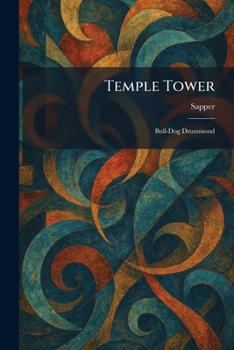
Temple Tower: Bull-Dog Drummond

"Temple Tower" is a high-stakes adventure featuring the legendary Captain Hugh "Bull-Dog" Drummond. In this installment of the celebrated series by Sapper, Drummond finds himself drawn into a sinister mystery involving a reclusive man living in a fortified mansion known as Temple Tower. What begins as a curious investigation into a local recluse quickly spirals into a dangerous confrontation with a ruthless gang of criminals.
Drummond, accompanied by his loyal band of friends, must navigate a web of secrets, hidden passages, and lethal traps to uncover the truth behind the tower's enigmatic occupant. The narrative showcases the quintessential elements of early twentieth-century thrillers: a charismatic hero, formidable villains, and a plot filled with suspense and daring exploits. As Drummond pits his wits and physical prowess against a cunning mastermind, the story delivers a blend of mystery and hard-hitting action.
"Temple Tower" remains a classic example of the "Bull-Dog Drummond" series, capturing the spirit of British adventure fiction and the enduring appeal of its indomitable protagonist. This work offers a compelling glimpse into the world of pulp mystery and the high-octane escapades that defined a generation of thriller writing.
This work has been selected by scholars as being culturally important, and is part of the knowledge base of civilization as we know it. This work was reproduced from the original artifact, and remains as true to the original work as possible. Therefore, you may see the original copyright references, library stamps (as most of these works have been housed in our most important libraries around the world), and other notations in the work.
This work is in the public domain in the United States of America, and possibly other nations. Within the United States, you may freely copy and distribute this work, as no entity (individual or corporate) has a copyright on the body of the work.
As a reproduction of a historical artifact, this work may contain missing or blurred pages, poor pictures, errant marks, etc. Scholars believe, and we concur, that this work is important enough to be preserved, reproduced, and made generally available to the public. We appreciate your support of the preservation process, and thank you for being an important part of keeping this knowledge alive and relevant.
Customer Reviews
ThriftBooks ® and the ThriftBooks ® logo are registered trademarks of Thrift Books Global, LLC
