


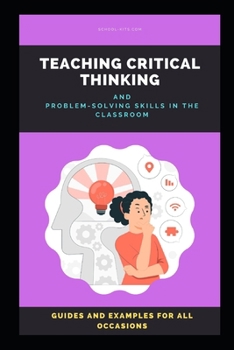
Teaching Critical Thinking: How to Teach Critical Thinking and Problem-solving Skills in the Classroom

Every single teacher needs to know these methods. Why? Because every student needs these skills This guidebook is designed for teaching children aged 7 to 17 so it's suitable for all school levels.
Critical thinking and problem-solving are essential skills that we should all have. These skills help us to understand what we are looking at, comprehend reading, decipher codes, calculate, understand instructions and much more. Teaching critical thinking and problem-solving skills will ensure your students are equipped to succeed.
In this manual you will be given step-by-step guides on all the methods and strategies for teaching critical thinking and problem-solving skills in the classroom. You also get pages of examples to use and adapt (from puzzles to safe classroom experiments) for ALL ages. You will be taken through what it is, its background and development and how to use it and teach it in all your lessons, no matter what subject you are teaching.
MAIN CHAPTERS OF TEACHING CRITICAL THINKINGWho Developed Critical Thinking?DefinitionsKey Strategies for Teaching Problem-Solving SkillsModelling The ProcessAn Example of Using the Modelling Process in GeographyProviding Opportunities for PracticeDebate TopicsEncouraging CollaborationHow to Encourage Collaboration - An ExampleAsking Open-ended QuestionsOpen-Ended Question ExamplesUsing technologyProviding FeedbackProblem-SolvingFinding the Root CauseWays to Engage Students in Critical Thinking (ages 7 to 17)Promoting Analytical and Logical ReasoningTeaching Effective Communication SkillsEngaging Parents and Families in Promoting Critical ThinkingSustaining and Evolving Critical Thinking PracticesHistoric Critical ThinkersTools to UseCustomer Reviews
ThriftBooks ® and the ThriftBooks ® logo are registered trademarks of Thrift Books Global, LLC
