


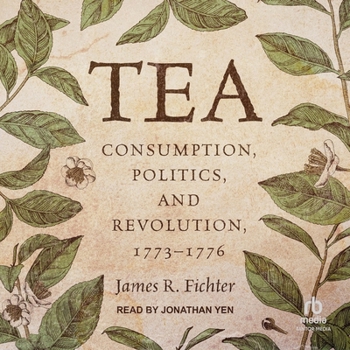
Tea: Consumption, Politics, and Revolution, 1773-1776
No Customer Reviews

In Tea James Fichter reveals that despite the so-called Boston Tea Party in 1773, two other large shipments of tea from the East India Company survived and were ultimately drunk in North America. The survival of these shipments shaped the politics of the years ahead and hint at the enduring potency of consumerism in revolutionary politics. Tea protests were widespread in 1774, but, Fichter argues, so were tea advertisements and tea sales. Such protests were noisy and sometimes misleading performances, not clear signs that tea consumption was unpopular. Revolutionaries vilified tea in their propaganda and prohibited the importation and consumption of tea and British goods. Yet merchant ledgers reveal these goods were still widely sold and consumed in 1775. Colonists supported Patriots more than they abided by non-consumption. When Congress ended its prohibition against tea in 1776, it reasoned that the ban was too widely violated to enforce. War was a more effective means to resist Parliament, after all, than was a boycott, and as rebel arms advanced, Patriots seized and used tea and other goods Britons left behind. By 1776 protesters sought tea, and, objecting to its high price, they redistributed rather than destroyed it. But as Fichter demonstrates in Tea, the commodity was not, by then, a symbol of the British state, but of American consumerism.
Format:MP3 CD
Language:English
ISBN:B0CW5BG1BB
ISBN13:9798212944045
Release Date:December 2023
Publisher:Tantor Audio
Customer Reviews
0 rating
Copyright © 2026 Thriftbooks.com
Terms of Use | Privacy Policy | Do Not Sell/Share My Personal Information | Cookie Policy | Cookie Preferences | Accessibility Statement
ThriftBooks ® and the ThriftBooks ® logo are registered trademarks of Thrift Books Global, LLC
ThriftBooks ® and the ThriftBooks ® logo are registered trademarks of Thrift Books Global, LLC
