


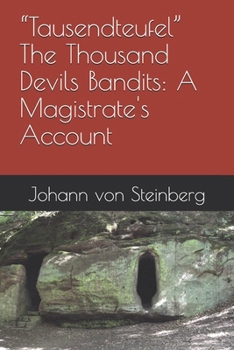
"Tausendteufel" The Thousand Devils Bandits: A Magistrate's Account

In 1600, Commissioner Johann Christoph von Steinberg investigates the Tausendteufel ("Thousand Devils"), a sophisticated criminal gang terrorizing the Bishopric of Halberstadt. Led by the intelligent Simon Bingelhelm, the gang operated for eighteen months from Daneil's Cave, committing twenty-six murders-including five children-along with systematic robbery, kidnapping, and trafficking.
Von Steinberg's methodical investigation uncovers the gang's base, recovers bodies from a cave burial chamber, and discovers journals documenting their crimes with business-like precision. After a raid kills two gang members, four survivors are captured, including Bingelhelm. Through interrogation under torture (legally sanctioned but morally troubling), comprehensive confessions are obtained.
The trial results in extraordinary punishments: Bingelhelm is quartered after preliminary torture with red-hot pincers, in a spectacular public execution witnessed by thousands. His remains are scattered across the territory as warning. The prosecution extends to merchants and corrupt officials who enabled the gang.
Years later, von Steinberg reflects on the case's moral complexities: justice was served but couldn't restore victims; torture obtained confessions of uncertain reliability; the spectacular execution may have normalized excessive violence. The case became legend, transforming documented history into cautionary myth about evil's nature and law's necessary but imperfect response
Customer Reviews
ThriftBooks ® and the ThriftBooks ® logo are registered trademarks of Thrift Books Global, LLC
