


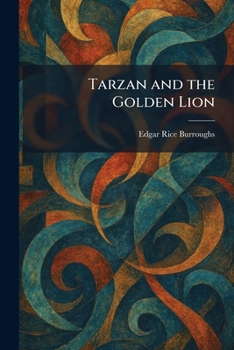



Book Overview
"Tarzan and the Golden Lion" is a pulse-pounding adventure set deep within the untamed wilds of Africa. The story follows the legendary Lord of the Jungle as he rescues an orphaned lion cub, raising it to become his loyal companion, Jad-bal-ja. This formidable golden lion becomes a central figure in Tarzan's struggle against a series of treacherous foes who threaten his family and his home.
As the narrative unfolds, Tarzan must contend with a devious impostor masquerading as the Ape-Man himself, leading to confusion and danger. The journey takes readers back to the mysterious lost city of Opar, where the high priestess La seeks to reclaim her power. Filled with themes of loyalty, animal companionship, and the eternal conflict between civilization and the wild, this novel showcases Edgar Rice Burroughs at the height of his storytelling prowess.
Fans of classic pulp fiction will find "Tarzan and the Golden Lion" to be a quintessential entry in the series, offering high-stakes action and evocative descriptions of the African landscape. It remains a definitive work of early 20th-century adventure literature.
This work has been selected by scholars as being culturally important, and is part of the knowledge base of civilization as we know it. This work was reproduced from the original artifact, and remains as true to the original work as possible. Therefore, you may see the original copyright references, library stamps (as most of these works have been housed in our most important libraries around the world), and other notations in the work.
This work is in the public domain in the United States of America, and possibly other nations. Within the United States, you may freely copy and distribute this work, as no entity (individual or corporate) has a copyright on the body of the work.
As a reproduction of a historical artifact, this work may contain missing or blurred pages, poor pictures, errant marks, etc. Scholars believe, and we concur, that this work is important enough to be preserved, reproduced, and made generally available to the public. We appreciate your support of the preservation process, and thank you for being an important part of keeping this knowledge alive and relevant.
Customer Reviews
My Favorite Tarzan Novel
ThriftBooks ® and the ThriftBooks ® logo are registered trademarks of Thrift Books Global, LLC
