


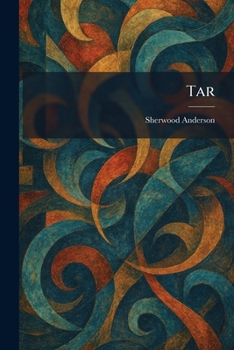
Tar

"Tar" is a poignant and evocative semi-autobiographical novel that captures the essence of a boy's upbringing in the American Midwest. Written by the acclaimed master of American realism, Sherwood Anderson, the narrative follows Tar Moorehead from his earliest memories through the transformative years of adolescence. Set against the backdrop of a rapidly changing Ohio town at the turn of the century, the book explores the innocence, curiosity, and eventual disillusionment that define the journey into adulthood.
Through a series of vivid vignettes, Anderson masterfully depicts the sights, sounds, and social dynamics of small-town life. Tar's experiences-ranging from family struggles and youthful labor to his growing awareness of the complexities of the human condition-serve as a universal reflection on the transition from a rural, agrarian past to an industrial future. "Tar" stands as a significant contribution to American literature, offering a lyrical and deeply personal exploration of the formative moments that shape a writer's soul. Readers will find in these pages a timeless meditation on memory, the search for identity, and the enduring spirit of the American heartland.
This work has been selected by scholars as being culturally important, and is part of the knowledge base of civilization as we know it. This work was reproduced from the original artifact, and remains as true to the original work as possible. Therefore, you may see the original copyright references, library stamps (as most of these works have been housed in our most important libraries around the world), and other notations in the work.
This work is in the public domain in the United States of America, and possibly other nations. Within the United States, you may freely copy and distribute this work, as no entity (individual or corporate) has a copyright on the body of the work.
As a reproduction of a historical artifact, this work may contain missing or blurred pages, poor pictures, errant marks, etc. Scholars believe, and we concur, that this work is important enough to be preserved, reproduced, and made generally available to the public. We appreciate your support of the preservation process, and thank you for being an important part of keeping this knowledge alive and relevant.
Customer Reviews
ThriftBooks ® and the ThriftBooks ® logo are registered trademarks of Thrift Books Global, LLC
