


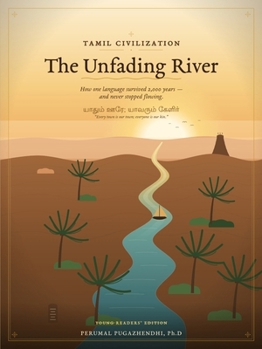
TAMIL CIVILIZATION The Unfading River

History is often imagined as the story of kings, battles, towering monuments, and magnificent cities. Yet some civilizations leave behind a different kind of legacy-one preserved not only in stone but in language, literature, memory, and the everyday lives of their people. The civilization of the ancient Tamil country belongs to this remarkable tradition.
For centuries, scholars have admired the richness of Tamil literature, especially the Tolkappiyam and the Sangam poems. These works describe a society with organized communities, flourishing trade, sophisticated ethics, and a deep understanding of human relationships and the natural world. Until recently, however, many wondered how closely this literary picture reflected historical reality.
The archaeological discoveries at Keezhadi have transformed that conversation. Excavations have uncovered evidence of urban settlements, literacy, skilled craftsmanship, trade, and daily life dating back more than two thousand years. While archaeology cannot prove every detail found in literature, it provides an important material context that strengthens our understanding of early Tamil civilization. Together, archaeological evidence and classical literature offer a richer and more balanced view of the past.
This book is written for curious readers, students, families, and anyone interested in exploring the foundations of one of the world's longest continuously living cultural traditions. Rather than presenting history as a collection of dates and names, it invites readers to investigate questions, examine evidence, and appreciate how historians and archaeologists reconstruct the past.
Throughout these pages, comparisons with other ancient civilizations are intended to provide historical context, not to rank cultures or claim superiority. History grows stronger when supported by evidence, careful reasoning, and an openness to new discoveries.
My hope is that this book inspires readers to look beyond myths and assumptions, to value both literature and archaeology, and to recognize the importance of preserving humanity's shared heritage. Every inscription, pottery shard, poem, and excavation adds another piece to the story of our collective past.
The journey into ancient Tamil civilization is far from complete. New discoveries will continue to refine our understanding, and that ongoing search for knowledge is one of history's greatest adventures. I invite you to begin that journey with curiosity, an open mind, and a respect for evidence.
Customer Reviews
ThriftBooks ® and the ThriftBooks ® logo are registered trademarks of Thrift Books Global, LLC
