


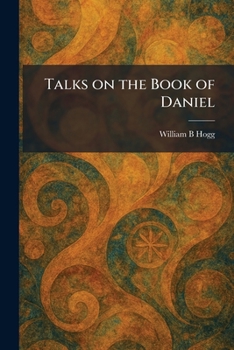
Talks on the Book of Daniel

"Talks on the Book of Daniel" is an insightful and accessible series of expositions centered on one of the most pivotal prophetic texts of the Old Testament. In this work, William B. Hogg provides a thorough examination of both the historical narratives and the complex apocalyptic visions that characterize the Book of Daniel, offering readers a clear path through its intricate themes.
The book explores the lives of Daniel and his companions during their exile in Babylon, emphasizing the themes of unwavering faith, moral courage, and divine sovereignty in the face of secular pressure. Hogg carefully analyzes the prophetic dreams and visions, interpreting the symbolic imagery concerning the destiny of nations and the ultimate establishment of the kingdom of God. By blending historical context with spiritual application, the author makes these ancient texts relevant for contemporary study.
Suited for students of the Bible, theology enthusiasts, and readers interested in biblical prophecy, "Talks on the Book of Daniel" serves as a valuable guide to understanding the profound messages of hope and faithfulness contained within this scripture. It remains a significant contribution to biblical scholarship and personal spiritual development, highlighting the enduring power of Daniel's witness throughout history.
This work has been selected by scholars as being culturally important, and is part of the knowledge base of civilization as we know it. This work was reproduced from the original artifact, and remains as true to the original work as possible. Therefore, you may see the original copyright references, library stamps (as most of these works have been housed in our most important libraries around the world), and other notations in the work.
This work is in the public domain in the United States of America, and possibly other nations. Within the United States, you may freely copy and distribute this work, as no entity (individual or corporate) has a copyright on the body of the work.
As a reproduction of a historical artifact, this work may contain missing or blurred pages, poor pictures, errant marks, etc. Scholars believe, and we concur, that this work is important enough to be preserved, reproduced, and made generally available to the public. We appreciate your support of the preservation process, and thank you for being an important part of keeping this knowledge alive and relevant.
Customer Reviews
ThriftBooks ® and the ThriftBooks ® logo are registered trademarks of Thrift Books Global, LLC
