


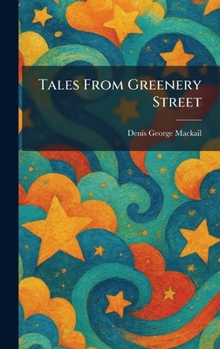
Tales From Greenery Street

"Tales From Greenery Street" is a charming collection of stories that explores the domestic lives and social intricacies of the residents of a quiet, fashionable London street during the 1920s. Written with the wit and light-hearted observation that characterized Denis Mackail's literary career, the book offers a series of vignettes focusing on the joys, minor tribulations, and romantic developments of various young couples and families.
As a companion to his celebrated depictions of middle-class life, this collection provides a nostalgic and humorous look at the interwar period. The narratives delve into the polite society of the era, capturing the nuances of English manners, the expectations of marriage, and the small dramas that occupy the residents of this idyllic neighborhood. The prose is elegant and engaging, reflecting the cultural landscape of early 20th-century London. "Tales From Greenery Street" serves as both a delightful comedy of manners and a valuable historical portrait of a specific era of British domestic life, inviting readers into a world of gentle humor and sophisticated social observation.
This work has been selected by scholars as being culturally important, and is part of the knowledge base of civilization as we know it. This work was reproduced from the original artifact, and remains as true to the original work as possible. Therefore, you may see the original copyright references, library stamps (as most of these works have been housed in our most important libraries around the world), and other notations in the work.
This work is in the public domain in the United States of America, and possibly other nations. Within the United States, you may freely copy and distribute this work, as no entity (individual or corporate) has a copyright on the body of the work.
As a reproduction of a historical artifact, this work may contain missing or blurred pages, poor pictures, errant marks, etc. Scholars believe, and we concur, that this work is important enough to be preserved, reproduced, and made generally available to the public. We appreciate your support of the preservation process, and thank you for being an important part of keeping this knowledge alive and relevant.
Customer Reviews
ThriftBooks ® and the ThriftBooks ® logo are registered trademarks of Thrift Books Global, LLC
