


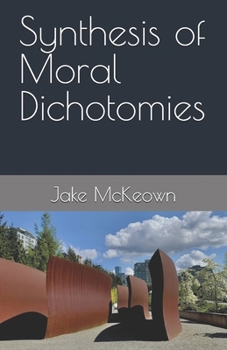
Synthesis of Moral Dichotomies

Synthesis of Moral Dichotomies is a sustained examination of the moral tension that has shaped human life across history: the conflict between power and conscience, authority and freedom, order and inner truth. Drawing primarily on Friedrich Nietzsche's distinction between master and slave morality and Erich Fromm's opposition between authoritarian and humanist religion, this essay fuses the two frameworks into a single, coherent moral dichotomy that extends beyond either thinker.
Rejecting the comforting illusion that moral systems can be harmonized without cost, the work argues that humanist ethics and master ethics are structurally opposed. Humanism grants inner freedom, dignity, and moral autonomy, but at the price of social cohesion, strategic power, and attachment to reality as it is. Master morality affirms life in its raw and tangible form, grounding value in strength, hierarchy, and domination, yet does so through repression, cruelty, and the denial of individual conscience.
Through historical analysis ranging from ancient Rome to modern revolutions, and philosophical engagement with Stoicism, Nietzsche, and psychoanalytic humanism, the essay shows that societies cannot exist without elements of both moral systems. Attempts to eliminate one in favor of the other lead either to tyranny or collapse. Moral progress, it contends, is not a march toward utopia, but a perpetual balancing act between irreconcilable goods.
Rather than offering a new moral doctrine, Synthesis of Moral Dichotomies confronts the reader with an unsettling conclusion: every serious moral decision sacrifices something essential, and every ethical stance leaves a remainder of regret. The task of moral life is not to escape this tension, but to understand it, endure it, and decide which costs one is willing to bear.
Related Subjects
PhilosophyCustomer Reviews
ThriftBooks ® and the ThriftBooks ® logo are registered trademarks of Thrift Books Global, LLC
