


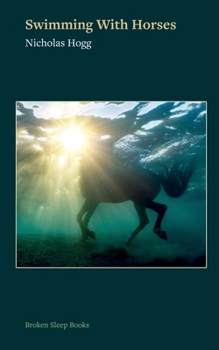
Swimming with Horses
No Customer Reviews

Swimming with Horses by Nicholas Hogg gathers poems of travel, witness, and working-class memory across a wide geographical and historical reach, moving from a Pembroke College room once occupied by Ted Hughes to the radioactive deep-time of a nuclear waste repository. Hogg's poetry is preoccupied with reading and writing as acts of preservation against war, extinction, and erasure, returning often to its literary inheritances in Burnside, Drake, Orton, Dickens, and de Beauvoir. Swimming with Horses is reportorial and cinematic, cool and unshowy, attentive to detail and to the texture of voice.
Format:Paperback
Language:English
ISBN:1917617097
ISBN13:9781917617093
Release Date:July 2026
Publisher:Broken Sleep Books
Length:80 Pages
Weight:0.19 lbs.
Dimensions:0.2" x 5.0" x 8.0"
Related Subjects
PoetryCustomer Reviews
0 rating
Copyright © 2026 Thriftbooks.com
Terms of Use | Privacy Policy | Do Not Sell/Share My Personal Information | Cookie Policy | Cookie Preferences | Accessibility Statement
ThriftBooks ® and the ThriftBooks ® logo are registered trademarks of Thrift Books Global, LLC
ThriftBooks ® and the ThriftBooks ® logo are registered trademarks of Thrift Books Global, LLC
