


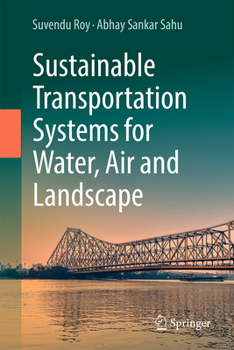
Sustainable Transportation Systems for Water, Air and Landscape

This book provides an integrated approach to developing transportation infrastructures (TIs) sustainably to minimize their impacts on water resources, air quality, hydro-geomorphological processes, and ecological systems. The fastest-growing transport network in the Anthropocene interacts with almost every natural process and adversely impacts the lithosphere, hydrosphere, atmosphere, and biosphere by influencing hydrological and geomorphological processes across the Earth's surface, releasing pollutants into the atmosphere and water bodies, disrupting ecological connectivity, and decreasing biodiversity, respectively. Finding a sustainable way to bring anthropogenic development, particularly transportation infrastructure, and different aspects of the Earth's environment into harmony is therefore imperative.
The interface between diverse forms of transportation infrastructure and various processes occurring across the topography, riverscape, and ecological landscape is comprehensively presented in this book. Furthermore, the negative consequences are identified and assessed, and effective solutions are proposed based on an intensive literature review, case-level investigations, mapping, geo-environmental modelling and simulation, and the evaluation of practical examples from different countries. By assisting policymakers and engineers in planning sustainable and resilient transport networks while supporting economic and social development, the book also contributes to achieving Sustainable Development Goals (SDGs) 9, 11, 13, and 15.
The book also discusses the implications of climate change for the integrity and serviceability of existing transportation infrastructure and emphasizes the need for future climate change mitigation and adaptation strategies in the transport sector to ensure sustainable development in the Anthropocene.
Related Subjects
Engineering Science Science & Math Science & Scientists Science & Technology TechnologyCustomer Reviews
ThriftBooks ® and the ThriftBooks ® logo are registered trademarks of Thrift Books Global, LLC
