


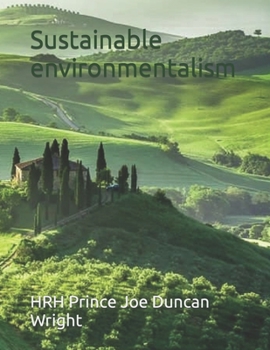
Sustainable environmentalism

Sustainable Environmentalism* is a collaborative work by members of the Royal Wright family, with a foreword by HRH Princess Lizzy Wright. The book emphasizes that environmental protection must go hand in hand with social and economic well-being, creating a balanced approach that ensures both the planet and humanity can thrive.
The authors highlight that in today's world - facing climate change, biodiversity loss, pollution, and resource depletion - sustainable environmentalism is not optional but essential. It is a critical philosophy and practice that integrates conservation, renewable energy, sustainable agriculture, and eco-friendly transportation into daily life.
Key PrinciplesConservation of Natural Resources Protecting ecosystems and habitats so they can be used responsibly and preserved for future generations. Actions include reducing waste, recycling, reusing materials, and safeguarding forests, rivers, and wildlife.
Renewable Energy Promoting solar, wind, and hydro power as alternatives to fossil fuels. These sources reduce pollution, mitigate climate change, and lessen dependence on non-renewable resources.
Sustainable Agriculture Encouraging organic farming, reducing pesticide use, and supporting food systems that protect soil, water, and biodiversity. This approach benefits both human health and wildlife.
Eco-Friendly Transportation Advocating for public transport, cycling, and walking to reduce carbon emissions and air pollution. These practices also promote physical activity and improve public health.
Integration of Social and Economic Well-Being Sustainable environmentalism recognizes that protecting the planet must also support communities, economies, and livelihoods, ensuring that environmental action is inclusive and equitable.
Author Biographies. These are the children of HRH Prince John Charles Wright and HRH Princess Lizzy, later Her Majesty Queen Lizzy. of the Royal Wright familly.HRH Princess Lizzy Wright (later HM Queen Lizzy): In her foreword, she underscores the moral and spiritual dimensions of environmental stewardship, reminding readers that caring for creation is both a duty and a privilege.
HRH Prince John Charles Wright: Known for his reflective style, he emphasizes the balance between tradition and modern responsibility in conservation.
HRH Prince George Wright: Celebrated for vivid imagery, he captures the majesty of landscapes and the urgency of protecting them.
HRH Prince Reginald Wright: His contributions highlight resilience and heritage, grounding environmentalism in cultural continuity.
HRH Princess Edith Wright: Offers lyrical sensitivity, weaving together nature's beauty with the importance of preservation.
HRH Prince Douglas Wright: Known for sensory language, he evokes the sights and sounds of ecosystems at risk.
HRH Prince Nolan Wright: Provides introspective reflections on humanity's role in safeguarding biodiversity.
HRH Princess Joyce Wright: Brings warmth and compassion, emphasizing the human connection to nature.
HRH Prince Bowman Wright: Adds contemplative depth, focusing on eternity and the long-term legacy of environmental stewardship.
Sustainable Environmentalism is a call to action. By blending practical guidance with cultural and spiritual reflection, the Wright family presents a vision of environmentalism that is holistic, inclusive, and enduring.
It reminds readers that protecting the planet is inseparable from promoting human well-being, and that sustainable practices - from conservation to renewable energy - are essential for ensuring a future where both nature and humanity can flourish.
Related Subjects
NatureCustomer Reviews
ThriftBooks® and the ThriftBooks® logo are registered trademarks of Thrift Books Global, LLC
