


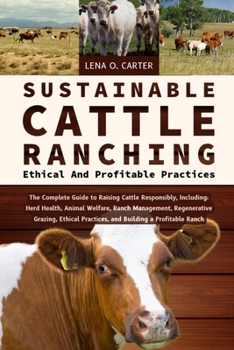
Sustainable Cattle Ranching: Ethical And Profitable Practices: The Complete Guide To Raising Cattle Responsibly, Including: Herd Health, Animal Welfar

Cattle ranching has been a fundamental aspect of agriculture for centuries, providing meat, dairy, leather, and other essential products to human societies. However, traditional ranching methods have often been criticized for their environmental impact, ethical concerns, and economic sustainability. Sustainable cattle ranching seeks to address these challenges by integrating ethical, environmentally friendly, and profitable practices. This approach ensures that ranching remains viable for future generations while minimizing harm to the planet and improving the well-being of livestock.
Sustainable cattle ranching involves responsible land and resource management, ethical animal husbandry, and business strategies that balance profitability with conservation. This method benefits not only ranchers but also consumers who are increasingly concerned about how their food is produced. With climate change, deforestation, and soil degradation becoming pressing global issues, the need for sustainable solutions in the cattle industry has never been greater.
In this chapter, we will explore the definition of sustainability in ranching, discuss why ethical and profitable practices are essential, and examine the key challenges and opportunities that come with transitioning to a sustainable cattle ranching model.
Defining Sustainability in RanchingSustainability in cattle ranching is a multifaceted concept that encompasses environmental, social, and economic factors. A sustainable ranching operation strives to maintain ecological balance, promote animal welfare, and ensure long-term economic viability. Unlike industrial farming, which often prioritizes short-term profits over ecological health, sustainable ranching focuses on longevity and resilience.
1. Environmental SustainabilityOne of the core principles of sustainable cattle ranching is minimizing its environmental impact. Traditional cattle ranching has been linked to deforestation, water overuse, greenhouse gas emissions, and soil degradation. Sustainable ranching aims to reverse these effects by adopting regenerative agriculture practices, such as:
Rotational Grazing: Moving cattle periodically between pastures to allow grass and soil recovery.Cover Crops and Native Grasses: Using plant diversity to improve soil health and prevent erosion.Water Conservation Measures: Implementing rainwater harvesting, pond restoration, and efficient irrigation systems.Carbon Sequestration: Encouraging practices that capture and store carbon in soil, reducing greenhouse gas emissions.By adopting these methods, ranchers can enhance the resilience of their land, making it more productive in the long run.
2. Ethical SustainabilityAnimal welfare is a critical aspect of sustainable ranching. Ethical sustainability ensures that cattle are raised in humane conditions, free from unnecessary stress, overcrowding, and inhumane treatment. Sustainable ranchers focus on:
Providing Adequate Space and Grazing Opportunities: Allowing cattle to roam freely and graze naturally.Minimizing the Use of Antibiotics and Hormones: Reducing reliance on pharmaceuticals unless necessary for health reasons.Ensuring Humane Slaughter Practices: Using ethical slaughtering techniques to minimize suffering.Consumers are becoming increasingly concerned about where their meat and dairy products come from, and ranchers who prioritize ethical practices are often rewarded with customer loyalty and higher market prices.
Customer Reviews
ThriftBooks® and the ThriftBooks® logo are registered trademarks of Thrift Books Global, LLC
