


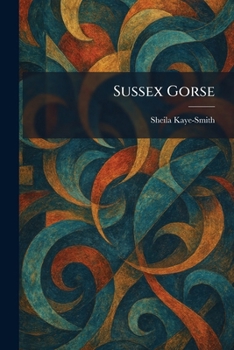
Sussex Gorse

"Sussex Gorse" is a powerful and evocative tale of relentless ambition and the harsh realities of rural life in the English countryside. Set against the rugged landscape of the Sussex downs, the story follows Reuben Backfield, a man consumed by an uncompromising obsession: to conquer and cultivate Boarzell, a vast stretch of wild, gorse-covered common land. Spanning several decades, the narrative tracks Reuben's single-minded pursuit as he sacrifices his family, his happiness, and his humanity to tame the unyielding earth.
Often compared to the works of Thomas Hardy, Sheila Kaye Smith's masterpiece is both a gripping family saga and a profound exploration of the conflict between man and nature. Through vivid prose and rich characterization, the novel captures the shifting social tides of the late nineteenth and early twentieth centuries while maintaining a focused look at the personal toll of agrarian pride. "Sussex Gorse" stands as a cornerstone of regional literature, offering a timeless meditation on the cost of legacy and the iron will required to transform a wilderness into a kingdom.
This work has been selected by scholars as being culturally important, and is part of the knowledge base of civilization as we know it. This work was reproduced from the original artifact, and remains as true to the original work as possible. Therefore, you may see the original copyright references, library stamps (as most of these works have been housed in our most important libraries around the world), and other notations in the work.
This work is in the public domain in the United States of America, and possibly other nations. Within the United States, you may freely copy and distribute this work, as no entity (individual or corporate) has a copyright on the body of the work.
As a reproduction of a historical artifact, this work may contain missing or blurred pages, poor pictures, errant marks, etc. Scholars believe, and we concur, that this work is important enough to be preserved, reproduced, and made generally available to the public. We appreciate your support of the preservation process, and thank you for being an important part of keeping this knowledge alive and relevant.
Customer Reviews
ThriftBooks ® and the ThriftBooks ® logo are registered trademarks of Thrift Books Global, LLC
