


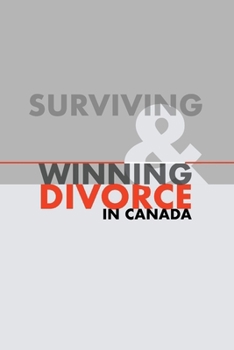
Surviving & Winning Divorce in Canada

Canada Divorce Book: A Practical Guide to Separation and Divorce in Canada (with Province & Territory Reference Guides)
If you're facing separation or divorce in Canada, you likely have urgent questions about parenting, child support, spousal support, property division, and what happens next. Canada Divorce Book is a clear, plain-language guide to help you understand the Canadian divorce process and make informed decisions-step by step.
This book is designed for real life: it explains the fundamentals of Canadian family law in accessible language, outlines your process options (negotiation, mediation, collaborative divorce, or court), and helps you organize the information you need to move forward efficiently.
What this guide helps you do:
Understand how separation and divorce work in Canada, including the typical stages and timelines
Make sense of parenting arrangements (parenting time and decision-making), and build a stable plan for children
Learn how child support and spousal support are commonly approached, including key factors that affect outcomes
Identify what matters in property and debt division, and prepare for financial disclosure
Choose an approach that fits your situation: mediation, collaborative family law, settlement discussions, or litigation
Reduce conflict and communicate more effectively during a high-stress transition
Avoid common mistakes that can increase cost, delay, and emotional strain
Includes Province & Territory Reference Guides covering regional pathways and key considerations in: British Columbia, Alberta, Saskatchewan, Manitoba, Ontario, Quebec, New Brunswick, Nova Scotia, Prince Edward Island, Newfoundland and Labrador, Yukon, Northwest Territories, and Nunavut.
Whether you are considering separation, already living apart, or preparing to finalize a divorce, this book provides a practical framework for understanding your rights, responsibilities, and options-so you can move forward with clarity.
Disclaimer: This book is for informational purposes only and does not constitute legal advice. Laws and procedures may change, and individual circumstances vary. Consider consulting a qualified family law professional for advice about your situation.
Customer Reviews
ThriftBooks ® and the ThriftBooks ® logo are registered trademarks of Thrift Books Global, LLC
