


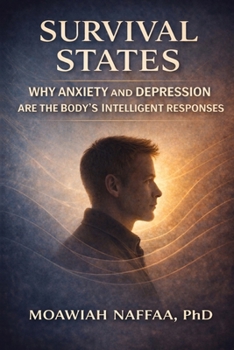
Survival States

What if anxiety and depression are not signs that something is wrong with you-but signals that your nervous system has been trying to protect you?
When anxiety keeps you alert even when nothing is wrong, exhaustion makes ordinary tasks feel impossibly heavy, or you feel both wired and empty at the same time, familiar advice-calm down, think positively, try harder, push through-can leave you feeling even more frustrated.
Survival States offers a different way to understand what is happening.
Drawing on a state-based view of the nervous system, Moawiah Naffaa, PhD, presents anxiety, depression, and regulation through a clear framework of mobilization, conservation, and flexibility.
Anxiety can be understood as mobilization-a system preparing for possible threat, keeping the body alert and the mind scanning. Depression can include conservation-like states-slowing, withdrawal, numbness, and reduced access to energy when continued engagement has become too costly. Regulation is not permanent calm. It is the ability to move between activation, rest, emotion, and engagement without becoming trapped.
Rather than asking, "What is wrong with me?", this book asks:
What is my nervous system trying to do right now-and what might help it move again?
Through relatable explanations and practical guidance, Survival States explores why anxiety feels urgent and physical, why reassurance and repeated checking may bring only temporary relief, why avoidance can make life smaller, and how prolonged activation can contribute to exhaustion, burnout, shutdown, and mixed "wired and empty" states.
The book then turns toward healing-not as another demand to recover correctly, but as the gradual restoration of flexibility, safety, trust, energy, and engagement.
Inside, you will discover:
- Why the nervous system can prioritize protection over comfort
- Why anxiety feels fast, repetitive, physical, and difficult to switch off
- Why depression may feel like heaviness, numbness, disconnection, or loss of energy rather than sadness alone
- How chronic activation can move toward burnout and shutdown
- Why anxiety and depression can overlap
- Why reassurance, checking, and avoidance can reinforce vigilance
- When body-first and mind-first approaches may be more useful
- Why pushing harder can backfire when the nervous system is overwhelmed
- How gentle re-engagement can help rebuild capacity
- Why temporary symptom returns do not automatically mean lost progress
With a Survival States Map, State-Matching Guide, difficult-moment guidance, practical language shifts, glossary, and further-reading resources, the book gives readers a framework they can return to when they need clarity and orientation.
Recovery does not mean never feeling anxious, low, stressed, or overwhelmed again. It means becoming better able to recognize your state, respond without unnecessary panic or force, recover more smoothly, and return to life.
For anyone who has wondered, "Why can't I just relax?" or "Why do I feel like I'm losing progress?", Survival States offers a more compassionate and practical way forward.
Stop fighting the state. Start understanding it. Discover what recovery can look like when the goal is not perfection-but flexibility, trust, and the freedom to engage with life again.
Customer Reviews
ThriftBooks ® and the ThriftBooks ® logo are registered trademarks of Thrift Books Global, LLC
