


Surface Biomodification of Implants
No Customer Reviews

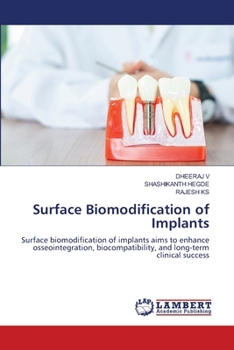
Surface biomodification of implants enhances osseointegration by modifying topography, chemistry, and energy of the implant surface. Techniques include additive methods (plasma spraying, hydroxyapatite or calcium phosphate coatings, anodization, bioactive growth factor coatings) and subtractive methods (acid etching, sandblasting, laser machining). These alter surface roughness, improve wettability, and promote protein adsorption and osteoblast attachment. Titanium and its alloys are commonly used, with oxide layers improving biocompatibility. Recent strategies involve nanostructuring, peptide immobilization, and antimicrobial coatings. Overall, surface biomodification optimizes mechanical stability, accelerates bone healing, and reduces implant failure risk, ensuring long-term clinical success.
Format:Paperback
Language:English
ISBN:6209051448
ISBN13:9786209051449
Release Date:November 2025
Publisher:LAP Lambert Academic Publishing
Length:156 Pages
Weight:0.48 lbs.
Dimensions:0.4" x 6.0" x 9.0"
Customer Reviews
0 rating
Copyright © 2026 Thriftbooks.com Terms of Use
| Privacy Policy | Do Not
Sell/Share My Personal Information | Cookie Policy | Cookie Preferences | Accessibility Statement
ThriftBooks® and the ThriftBooks® logo are registered trademarks of Thrift Books Global, LLC
ThriftBooks® and the ThriftBooks® logo are registered trademarks of Thrift Books Global, LLC
