


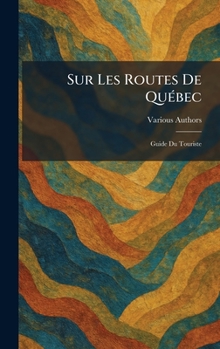
Sur Les Routes De QuÃ(c)bec: Guide Du Touriste

"Sur Les Routes De Québec: Guide Du Touriste" is an extensive travel guide that captures the essence of the province of Quebec during the late 1920s. This work serves as an essential historical document for understanding the evolution of tourism and transportation in Eastern Canada. It provides detailed accounts of the roads, towns, and scenic landscapes that defined the traveler's experience in the early twentieth century.
The guide meticulously details various routes through the province, highlighting significant historical landmarks, religious sites, and natural wonders. From the maritime allure of the Gaspé to the historical fortifications of Quebec City and the industrial growth of Montreal, the book paints a vivid picture of a region transitioning into the modern age while fiercely preserving its cultural roots. It offers insights into the local customs, architecture, and geography that made Quebec a unique destination for early motorists.
As a resource for historians and travel enthusiasts alike, "Sur Les Routes De Québec: Guide Du Touriste" reflects the pride and promotional efforts of a province showcasing its heritage to the world. It stands as a testament to the beginning of the road-trip era, documenting the infrastructure and attractions that laid the foundation for contemporary Canadian tourism.
This work has been selected by scholars as being culturally important, and is part of the knowledge base of civilization as we know it. This work was reproduced from the original artifact, and remains as true to the original work as possible. Therefore, you may see the original copyright references, library stamps (as most of these works have been housed in our most important libraries around the world), and other notations in the work.
This work is in the public domain in the United States of America, and possibly other nations. Within the United States, you may freely copy and distribute this work, as no entity (individual or corporate) has a copyright on the body of the work.
As a reproduction of a historical artifact, this work may contain missing or blurred pages, poor pictures, errant marks, etc. Scholars believe, and we concur, that this work is important enough to be preserved, reproduced, and made generally available to the public. We appreciate your support of the preservation process, and thank you for being an important part of keeping this knowledge alive and relevant.
Customer Reviews
ThriftBooks ® and the ThriftBooks ® logo are registered trademarks of Thrift Books Global, LLC
