


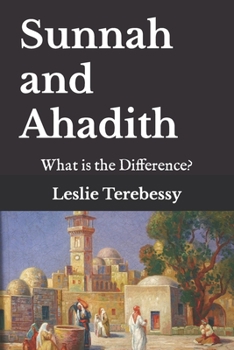
Sunnah and Ahadith: What is the Difference?
No Customer Reviews

This text explores the relationship between the sunnah and the ahadith. For the fusion of the two produced confusion. To know the tradition of the prophet it is necessary to disentangle the two. The sunnah refers to what the prophet practiced; the ahadith represent what transmitters reported that the prophet practiced. The two are not equal. The prophet followed revelation. Thus, whoever follows revelation follows the prophet. He did not follow Bukhari. Whoever follows Bukhari follows what the prophet did not follow. Whoever does not follow revelation, does not follow what the prophet followed. However, it is not required to set aside all ahadith, just those that run counter to revelation or possess related flaws. The ahadith may be used to enhance knowledge on the way to pray. However, ahadith should not be used as a root of the law, except for administrative requirements. A hadith may not be treated as a greater authority than or "equal" to revelation. It is necessary to affirm the pre-eminence of revelation in relation to tradition, and the pre-eminence of reason in relation to tradition. It is essential to remember that reason is used at every stage of ijtihad, which encompasses exegesis. A tauhidic epistemology of ijtihad, which affirms the pre-eminence of revelation in relation to tradition at all times, is required. For the reversal of the authority of revelation and tradition are hardly in keeping with the teaching of tauhid.
Format:Paperback
Language:English
ISBN:B09F8STB9S
ISBN13:9798468793794
Release Date:September 2021
Publisher:Independently Published
Length:56 Pages
Weight:0.19 lbs.
Dimensions:0.1" x 6.0" x 9.0"
Customer Reviews
0 rating
Copyright © 2026 Thriftbooks.com Terms of Use
| Privacy Policy | Do Not
Sell/Share My Personal Information | Cookie Policy | Cookie Preferences | Accessibility Statement
ThriftBooks® and the ThriftBooks® logo are registered trademarks of Thrift Books Global, LLC
ThriftBooks® and the ThriftBooks® logo are registered trademarks of Thrift Books Global, LLC
