


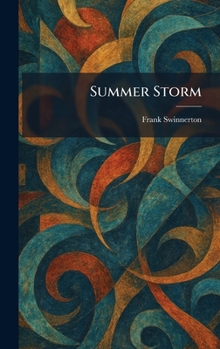
Summer Storm

"Summer Storm" is a sophisticated exploration of friendship, rivalry, and the complexities of human emotion set against the backdrop of 1920s London. The narrative focuses on the contrasting lives of two young women, Beatrice and Polly, who work together in a small typing office. While Beatrice is poised and self-contained, Polly is vibrant and impulsive; their relationship is tested as they navigate the intricacies of professional life, romantic longings, and their own differing temperaments.
As the title suggests, the novel captures a period of emotional upheaval, tracing the subtle shifts in power and affection that define the characters' lives. Frank Swinnerton masterfully depicts the atmosphere of post-World War I urban existence, offering a detailed portrait of the social nuances and psychological depths of his protagonists. With its keen observation of character and its evocative prose, "Summer Storm" remains a compelling study of the tensions that arise when individual desires collide with the expectations of society. It is a work of significant literary merit that provides deep insight into the domestic and emotional landscapes of the early twentieth century.
This work has been selected by scholars as being culturally important, and is part of the knowledge base of civilization as we know it. This work was reproduced from the original artifact, and remains as true to the original work as possible. Therefore, you may see the original copyright references, library stamps (as most of these works have been housed in our most important libraries around the world), and other notations in the work.
This work is in the public domain in the United States of America, and possibly other nations. Within the United States, you may freely copy and distribute this work, as no entity (individual or corporate) has a copyright on the body of the work.
As a reproduction of a historical artifact, this work may contain missing or blurred pages, poor pictures, errant marks, etc. Scholars believe, and we concur, that this work is important enough to be preserved, reproduced, and made generally available to the public. We appreciate your support of the preservation process, and thank you for being an important part of keeping this knowledge alive and relevant.
Customer Reviews
ThriftBooks ® and the ThriftBooks ® logo are registered trademarks of Thrift Books Global, LLC
