


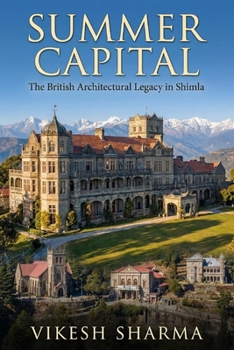
Summer Capital: The British Architectural Legacy in Shimla

Summer Capital: The British Architectural Legacy in Shimla explores how a remote Himalayan ridge was transformed into the summer capital of British India through architecture, engineering, and urban design. Tracing Shimla's evolution from forest refuge to imperial seat, the book examines how stone, timber, and iron were used to impose order, authority, and comfort in a challenging mountain environment.
Rather than viewing Shimla's buildings as simple replicas of English styles, this study reveals them as products of negotiation between colonial ambition and local conditions. It highlights how Neo-Gothic churches, civic halls, theatres, villas, and the Viceregal Lodge were adapted to monsoon rains, earthquakes, steep slopes, and indigenous building traditions such as the Dhaji wall system.
Moving along the Ridge, through institutions of faith and leisure, and up to the commanding heights of Observatory Hill, the book presents architecture as a tool of governance, social hierarchy, and daily life. It also follows the vital role of infrastructure, especially the Kalka-Shimla Railway, in turning isolation into connectivity.
Combining historical research with architectural analysis, Summer Capital offers a biography of a city shaped by climate, power, and adaptation. It shows how Shimla's colonial buildings became enduring elements of a modern Indian town and argues that their logic of resilience and negotiation still holds lessons for the future of hill settlements today.
Customer Reviews
ThriftBooks ® and the ThriftBooks ® logo are registered trademarks of Thrift Books Global, LLC
