


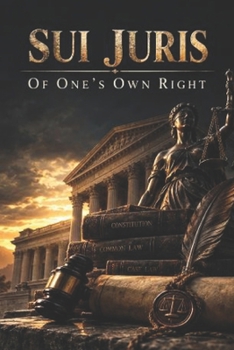
Sui Juris: Of One's Own Right

What if the most powerful legal standing you could ever hold was already yours - and no one told you?
American courts operate on a system of status. Every person who walks into a courtroom carries a legal identity - but most never choose that identity for themselves. Instead, courts assign one. The result is a quiet transfer of authority that strips individuals of rights they never knew they had.
This book breaks open the framework.
Sui juris. In propria persona. Special appearance. Proper person. These are not fringe theories or sovereign citizen slogans. They are terms embedded in centuries of Anglo-American jurisprudence, defined in Black's Law Dictionary, recognized by the United States Supreme Court, and deployed in courtrooms every single day - mostly by attorneys who never explain them to their clients.
The distinction between appearing as a "public person" subject to statutory regulation and a "private person" exercising inherent constitutional rights is not academic. It determines whether a court has jurisdiction over you. It determines whether you can be compelled to accept appointed counsel. It determines whether a judgment entered against you is valid or void on its face.
This book traces these concepts from their Latin origins through English common law, into the Constitutional Convention, through two centuries of American case law, and into the modern courtroom. Every claim is anchored in specific legal authority - named court decisions, constitutional provisions, federal statutes, and the legal dictionaries that courts themselves rely on.
But this is not a magic remedy book. Courts have rejected status-based arguments when they are poorly presented, improperly timed, or conflated with discredited sovereign citizen theories. This book documents those failures with the same precision it documents the successes. Exposed are the exposed traps - the procedural defaults that waive rights before a person even understands what happened, the general appearances that surrender jurisdiction before a single word is spoken, the appointed counsel whose very presence can override a defendant's constitutional right to self-representation.
What emerges is a complete map of how legal identity actually works in American courts - not how anyone wishes it worked, not how internet forums claim it works, but how courts have actually ruled when these arguments were properly raised with correct procedure and legitimate authority.
Whether you are facing a legal matter, studying the law, or simply believe that every American should understand the system that governs them, this book provides what the system itself never volunteers: the information you need to understand your own legal standing.
The courtroom is not a place for the uninformed. What you don't know absolutely will be used against you.
Related Subjects
LawCustomer Reviews
ThriftBooks ® and the ThriftBooks ® logo are registered trademarks of Thrift Books Global, LLC
