


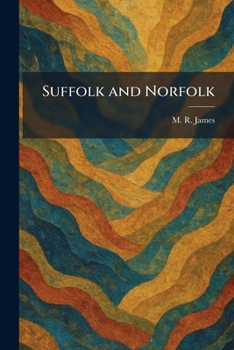
Suffolk and Norfolk

Select Format
Select Condition 
Book Overview
"Suffolk and Norfolk" is a comprehensive and authoritative topographical guide to the historic counties of East Anglia, written by the celebrated scholar and author M. R. James. Renowned for his deep antiquarian knowledge and mastery of medieval history, James presents an exhaustive survey of the architectural and cultural treasures found within these regions. The work places a significant emphasis on the ecclesiastical heritage of the area, providing meticulous descriptions of parish churches, ancient monuments, medieval stained glass, and monastic ruins.
Rather than a mere list of sites, James offers a narrative that breathes life into the local history and folklore of the English countryside. From the bustling market towns to the serene coastal villages, the book explores the unique character and evolution of the landscape. It serves as both an educational resource for students of British history and an evocative companion for those wishing to explore the hidden gems of the Eastern counties. With its scholarly depth and accessible prose, "Suffolk and Norfolk" stands as a definitive tribute to the regional identity and historical importance of one of England's most storied landscapes.
This work has been selected by scholars as being culturally important, and is part of the knowledge base of civilization as we know it. This work was reproduced from the original artifact, and remains as true to the original work as possible. Therefore, you may see the original copyright references, library stamps (as most of these works have been housed in our most important libraries around the world), and other notations in the work.
This work is in the public domain in the United States of America, and possibly other nations. Within the United States, you may freely copy and distribute this work, as no entity (individual or corporate) has a copyright on the body of the work.
As a reproduction of a historical artifact, this work may contain missing or blurred pages, poor pictures, errant marks, etc. Scholars believe, and we concur, that this work is important enough to be preserved, reproduced, and made generally available to the public. We appreciate your support of the preservation process, and thank you for being an important part of keeping this knowledge alive and relevant.
Customer Reviews
ThriftBooks ® and the ThriftBooks ® logo are registered trademarks of Thrift Books Global, LLC
