


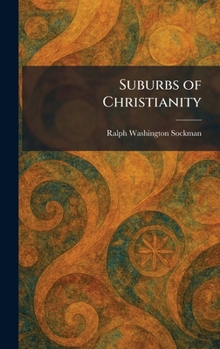
Suburbs of Christianity

"Suburbs of Christianity" is a compelling collection of sermons and essays that explores the spiritual landscape of the early 20th century. Written by the renowned minister Ralph Washington Sockman, the work delves into the metaphorical outskirts of faith, addressing those who find themselves on the periphery of religious life or struggling to reconcile traditional beliefs with the demands of a modernizing world.
Through a series of thoughtful reflections, Sockman examines the intersection of the sacred and the secular, advocating for a faith that is both deeply personal and socially engaged. The text reflects the influence of the Social Gospel movement, emphasizing the need for Christian principles to be applied to contemporary social, ethical, and cultural challenges. By moving beyond the "suburbs" and toward the core of religious conviction, Sockman encourages readers to find a more robust and meaningful connection to their faith.
Valued for its eloquent prose and keen insights into human nature, "Suburbs of Christianity" provides a window into the evolution of American Protestant thought. It remains an essential read for those interested in the history of religious discourse and the perennial quest for spiritual authenticity in an era of rapid change.
This work has been selected by scholars as being culturally important, and is part of the knowledge base of civilization as we know it. This work was reproduced from the original artifact, and remains as true to the original work as possible. Therefore, you may see the original copyright references, library stamps (as most of these works have been housed in our most important libraries around the world), and other notations in the work.
This work is in the public domain in the United States of America, and possibly other nations. Within the United States, you may freely copy and distribute this work, as no entity (individual or corporate) has a copyright on the body of the work.
As a reproduction of a historical artifact, this work may contain missing or blurred pages, poor pictures, errant marks, etc. Scholars believe, and we concur, that this work is important enough to be preserved, reproduced, and made generally available to the public. We appreciate your support of the preservation process, and thank you for being an important part of keeping this knowledge alive and relevant.
Customer Reviews
ThriftBooks ® and the ThriftBooks ® logo are registered trademarks of Thrift Books Global, LLC
