


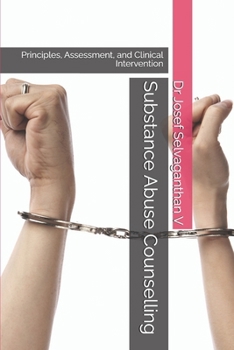
Substance Abuse Counselling: Principles, Assessment, and Clinical Intervention
No Customer Reviews

Substance use and addiction remain among the most pressing challenges confronting individuals, families, and societies in the modern world. While advances in science, medicine, and psychology have significantly improved our understanding of these conditions, the complexity of addiction continues to demand a comprehensive and integrated approach. This book has been developed to address that need, providing a structured, academically grounded resource for students, educators, and practitioners in the field of substance abuse counselling.
The study of addiction has evolved from earlier moral and behavioural interpretations toward a more sophisticated understanding that incorporates biological, psychological, and social dimensions
Contemporary research has demonstrated that addiction involves measurable changes in brain structure and function, affecting processes such as reward, motivation, memory, and decision-making. At the same time, psychological factors such as coping, trauma, and emotional regulation, together with social influences including family dynamics and environmental context, play a critical role in the development and maintenance of substance use disorders.
This text reflects that integrated perspective. It begins with a comprehensive examination of the biological and pharmacological foundations of addiction, including the functioning of neurotransmitters, the role of brain structures, and the mechanisms of action of various substances such as depressants, stimulants, narcotics, inhalants, and designer drugs. By establishing this scientific foundation at the outset, the reader is equipped with a clear understanding of how substances affect the brain and body, and why patterns of use may become compulsive and difficult to control.
Building on this foundation, the book proceeds to the principles and practices of substance abuse counselling. It presents a structured approach to assessment, treatment planning, case management, crisis intervention, psychoeducation, referral systems, and professional documentation. These components are essential for effective practice and are addressed in a manner that integrates theory with real-world application. Emphasis is placed on clarity, organisation, and professional responsibility, ensuring that readers are prepared not only to understand but also to implement these practices.
The text further explores the development of core counselling skills, communication techniques, and structured models of the counselling process.
Particular attention is given to the application of these skills in the context of substance use, including the management of resistance, ambivalence, and relapse. In addition, the book includes detailed discussions on alcohol and drug counselling, highlighting the differences in approach required for various substances and patterns of use.
A distinctive feature of this work is the inclusion of applied case studies that provide realistic, detailed illustrations of counselling in practice. These case studies incorporate co-occurring conditions such as trauma and developmental differences, and are presented with counsellor-client dialogue to demonstrate the practical application of theoretical concepts. This approach supports experiential learning and prepares students for the complexities of real-world clinical settings.
The book has been developed with both students and practitioners in mind. For students, it provides a comprehensive introduction to the field, supported by clear explanations and practical examples. For practitioners, it offers a structured reference that reinforces professional standards and supports continued development. The integration of biological knowledge with counselling practice reflects current expectations in higher education and professional training programmes.
The study of addiction has evolved from earlier moral and behavioural interpretations toward a more sophisticated understanding that incorporates biological, psychological, and social dimensions
Contemporary research has demonstrated that addiction involves measurable changes in brain structure and function, affecting processes such as reward, motivation, memory, and decision-making. At the same time, psychological factors such as coping, trauma, and emotional regulation, together with social influences including family dynamics and environmental context, play a critical role in the development and maintenance of substance use disorders.
This text reflects that integrated perspective. It begins with a comprehensive examination of the biological and pharmacological foundations of addiction, including the functioning of neurotransmitters, the role of brain structures, and the mechanisms of action of various substances such as depressants, stimulants, narcotics, inhalants, and designer drugs. By establishing this scientific foundation at the outset, the reader is equipped with a clear understanding of how substances affect the brain and body, and why patterns of use may become compulsive and difficult to control.
Building on this foundation, the book proceeds to the principles and practices of substance abuse counselling. It presents a structured approach to assessment, treatment planning, case management, crisis intervention, psychoeducation, referral systems, and professional documentation. These components are essential for effective practice and are addressed in a manner that integrates theory with real-world application. Emphasis is placed on clarity, organisation, and professional responsibility, ensuring that readers are prepared not only to understand but also to implement these practices.
The text further explores the development of core counselling skills, communication techniques, and structured models of the counselling process.
Particular attention is given to the application of these skills in the context of substance use, including the management of resistance, ambivalence, and relapse. In addition, the book includes detailed discussions on alcohol and drug counselling, highlighting the differences in approach required for various substances and patterns of use.
A distinctive feature of this work is the inclusion of applied case studies that provide realistic, detailed illustrations of counselling in practice. These case studies incorporate co-occurring conditions such as trauma and developmental differences, and are presented with counsellor-client dialogue to demonstrate the practical application of theoretical concepts. This approach supports experiential learning and prepares students for the complexities of real-world clinical settings.
The book has been developed with both students and practitioners in mind. For students, it provides a comprehensive introduction to the field, supported by clear explanations and practical examples. For practitioners, it offers a structured reference that reinforces professional standards and supports continued development. The integration of biological knowledge with counselling practice reflects current expectations in higher education and professional training programmes.
Format:Paperback
Language:English
ISBN:B0GY3SDJJ5
ISBN13:9798258287519
Release Date:April 2026
Publisher:Independently Published
Length:326 Pages
Weight:0.87 lbs.
Dimensions:0.8" x 6.0" x 9.0"
Customer Reviews
0 rating
Copyright © 2026 Thriftbooks.com
Terms of Use | Privacy Policy | Do Not Sell/Share My Personal Information | Cookie Policy | Cookie Preferences | Accessibility Statement
ThriftBooks ® and the ThriftBooks ® logo are registered trademarks of Thrift Books Global, LLC
ThriftBooks ® and the ThriftBooks ® logo are registered trademarks of Thrift Books Global, LLC
