


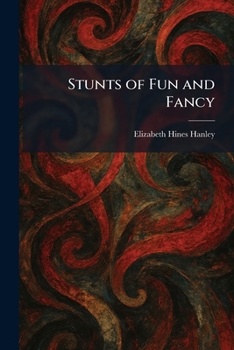
Stunts of Fun and Fancy

"Stunts of Fun and Fancy" is a charming and practical collection of dramatic sketches, physical stunts, and imaginative activities designed for social gatherings and amateur performances. Compiled during the height of the 1920s social club era, this work provides a fascinating look into the era's communal entertainment culture. The book features a variety of "stunts"-short, often humorous performances or games-that require minimal preparation but offer maximum engagement for participants and audiences alike.
Elizabeth Hines Hanley provides clear instructions for staging these vignettes, making the collection an excellent resource for schools, social organizations, and community theaters looking for vintage performance material. From whimsical fancies to energetic physical displays, the pieces included reflect a period of American history where live, participatory entertainment was a cornerstone of social life. This volume serves not only as a functional guide for event planning but also as a delightful historical document of early 20th-century leisure and the performing arts. Whether used for historical reenactments or modern-day parties, "Stunts of Fun and Fancy" remains a testament to the enduring power of simple, creative play.
This work has been selected by scholars as being culturally important, and is part of the knowledge base of civilization as we know it. This work was reproduced from the original artifact, and remains as true to the original work as possible. Therefore, you may see the original copyright references, library stamps (as most of these works have been housed in our most important libraries around the world), and other notations in the work.
This work is in the public domain in the United States of America, and possibly other nations. Within the United States, you may freely copy and distribute this work, as no entity (individual or corporate) has a copyright on the body of the work.
As a reproduction of a historical artifact, this work may contain missing or blurred pages, poor pictures, errant marks, etc. Scholars believe, and we concur, that this work is important enough to be preserved, reproduced, and made generally available to the public. We appreciate your support of the preservation process, and thank you for being an important part of keeping this knowledge alive and relevant.
Customer Reviews
ThriftBooks ® and the ThriftBooks ® logo are registered trademarks of Thrift Books Global, LLC
