


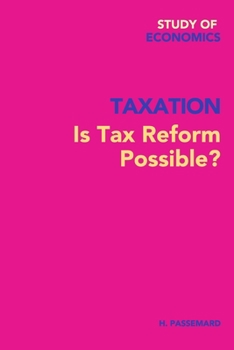
Study of Economics: Taxation
No Customer Reviews

We are all involved in devoting about 40 percent of our working lives to supporting governmental activities. We all have some of them that we like and some that we dislike, but there are very few of us indeed who believe that we are getting our money's worth for the 40 percent of our income that is being used to support state, local, and federal governments and yet that percentage keeps growing. Here we are, and this is the real dilemma, the real problem that we want to talk about and consider: how is it that if you were to conduct a poll among the people of the United States, if you were to ask them, each and every one of them, do you think you are getting your money's worth for the forty percent of your income that is being spent on your behalf by governmental bureaucrats, the number of people who would say yes to that would be very small, and all of those would be employees of the US government. There might be a few state employees in it, too. On the other hand, we have a democratic system. We have elected representatives, they do what the public at large wants, and year by year they vote on our behalf to spend more and more of our money. How do we explain that dilemma and what can we do about it? What is it that produces a result that seems so clearly not in line with the fundamental wants of the people? That's really our topic and that's what Hugo Passemard mean by asking is tax reform possible.
Format:Paperback
Language:English
ISBN:1715356365
ISBN13:9781715356361
Release Date:October 2020
Publisher:Blurb
Length:220 Pages
Weight:0.66 lbs.
Dimensions:0.5" x 6.0" x 9.0"
Customer Reviews
0 rating
Copyright © 2026 Thriftbooks.com Terms of Use
| Privacy Policy | Do Not
Sell/Share My Personal Information | Cookie Policy | Cookie Preferences | Accessibility Statement
ThriftBooks® and the ThriftBooks® logo are registered trademarks of Thrift Books Global, LLC
ThriftBooks® and the ThriftBooks® logo are registered trademarks of Thrift Books Global, LLC
