


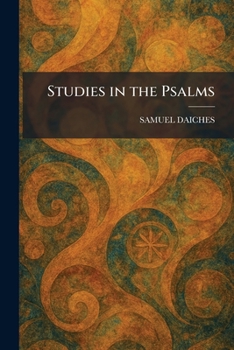
Studies in the Psalms

"Studies in the Psalms" is a scholarly and insightful exploration of the Book of Psalms, providing a deep dive into the linguistic and theological intricacies of these ancient sacred hymns. Written by the renowned scholar Samuel Daiches, this work offers a meticulous analysis of the Hebrew text, bringing to light the nuances of the original language and the historical context in which these prayers and songs were composed.
The book serves as a critical resource for understanding the complexities of the Psalter, combining philological expertise with a profound appreciation for the spiritual heritage of the Old Testament. Daiches examines specific passages and themes, clarifying difficult verses through the lens of Semitic studies and traditional interpretation. This collection of studies is designed to bridge the gap between technical academic inquiry and a broader appreciation for the literary beauty of the Bible.
As a significant contribution to biblical criticism, "Studies in the Psalms" remains a valuable text for theologians, students of religion, and anyone seeking a more thorough grasp of the poetic and devotional foundation of the Judeo-Christian tradition. It highlights the enduring relevance of the Psalms as both a focus of rigorous academic study and a source of timeless spiritual resonance.
This work has been selected by scholars as being culturally important, and is part of the knowledge base of civilization as we know it. This work was reproduced from the original artifact, and remains as true to the original work as possible. Therefore, you may see the original copyright references, library stamps (as most of these works have been housed in our most important libraries around the world), and other notations in the work.
This work is in the public domain in the United States of America, and possibly other nations. Within the United States, you may freely copy and distribute this work, as no entity (individual or corporate) has a copyright on the body of the work.
As a reproduction of a historical artifact, this work may contain missing or blurred pages, poor pictures, errant marks, etc. Scholars believe, and we concur, that this work is important enough to be preserved, reproduced, and made generally available to the public. We appreciate your support of the preservation process, and thank you for being an important part of keeping this knowledge alive and relevant.
Customer Reviews
ThriftBooks ® and the ThriftBooks ® logo are registered trademarks of Thrift Books Global, LLC
