


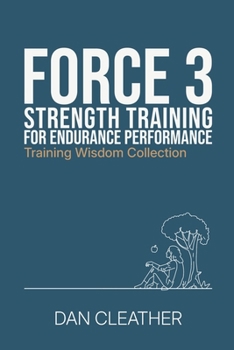
Strength Training for Endurance Performance: Force 3

Endurance performance depends not only on energy supply, but on how force is produced and expressed.
Most explanations of endurance performance focus on physiology - oxygen uptake, lactate threshold, and the body's ability to access energy. Force 3 approaches the same problem from a complementary mechanical perspective, exploring how force, work, and power shape endurance performance, and how the conversion of chemical energy into movement governs what an athlete can do.
Beginning from first principles, the book develops a simple model linking mechanics and energetics, and examines the interacting roles of energy access, efficiency, body mass, fatigue, and the expression of force during movement. It explains why strength can influence endurance performance even in traditionally aerobic sports, and how biomechanics provides a clearer framework for understanding both performance and injury.
The later chapters illustrate the practical implications of these ideas through applied discussion and case studies in running and rowing, showing how strength training can be integrated within endurance programmes to support performance and reduce injury risk.
Written for coaches, athletes, and practitioners, Force 3 offers a clear, mechanics-informed framework for understanding endurance performance while remaining grounded in its physiological foundations.
Customer Reviews
ThriftBooks® and the ThriftBooks® logo are registered trademarks of Thrift Books Global, LLC
