


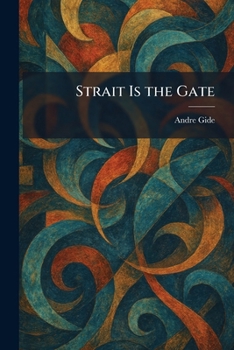
Strait Is the Gate

"Strait Is the Gate" is a profound and poignant exploration of the tension between human love and spiritual devotion. Written by Nobel laureate Andr Gide, this classic of literature tells the story of Jerome and his cousin Alissa, whose deep affection for one another is complicated by Alissa's intensifying religious fervor. As Jerome pursues a life shared with his beloved, Alissa becomes increasingly convinced that the path to salvation-the "strait gate" mentioned in the Gospels-requires the renunciation of earthly happiness.
The narrative unfolds with psychological depth, capturing the emotional turmoil of two souls caught between the physical and the divine. Gide's masterful prose examines the sacrifices demanded by extreme piety and the tragic consequences of a love that seeks to transcend the boundaries of the material world. A seminal work of early 20th-century fiction, "Strait Is the Gate" remains a haunting meditation on the nature of faith, virtue, and the human heart's capacity for self-denial.
This work has been selected by scholars as being culturally important, and is part of the knowledge base of civilization as we know it. This work was reproduced from the original artifact, and remains as true to the original work as possible. Therefore, you may see the original copyright references, library stamps (as most of these works have been housed in our most important libraries around the world), and other notations in the work.
This work is in the public domain in the United States of America, and possibly other nations. Within the United States, you may freely copy and distribute this work, as no entity (individual or corporate) has a copyright on the body of the work.
As a reproduction of a historical artifact, this work may contain missing or blurred pages, poor pictures, errant marks, etc. Scholars believe, and we concur, that this work is important enough to be preserved, reproduced, and made generally available to the public. We appreciate your support of the preservation process, and thank you for being an important part of keeping this knowledge alive and relevant.
Customer Reviews
ThriftBooks ® and the ThriftBooks ® logo are registered trademarks of Thrift Books Global, LLC
