


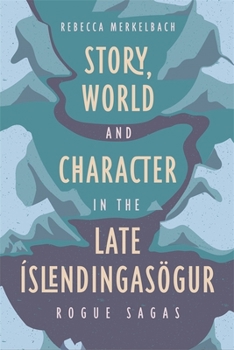
Story, World and Character in the Late Íslendingasögur: Rogue Sagas
No Customer Reviews

Argues for new models of reading the complexity and subversiveness of fourteen "post-classical" sagas. The late Sagas of Icelanders, thought to be written in the fourteenth and fifteenth centuries, have hitherto received little scholarly attention. Previous generations of critics have unfavourably compared them to "classical" slendingas gur and fornaldars gur, leading modern audiences to project their expectations onto narratives that do not adhere to simple taxonomies and preconceived notions of genre. As "rogues" within the canon, they challenge the established notions of what makes an slendingasaga. Based on a critical appraisal of conceptualisations of canon and genre in saga literature, this book offers a new reading of the relationship between the individual, paranormal, and social dimensions that form the foundation of these sagas. It draws on a multidisciplinary approach, informed by perspectives as diverse as "possible worlds" theory, gender studies, and social history. The "post-classical" sagas are not only read anew and integrated into both their generic and socio-historical context; they are met on their own terms, allowing their fascinating narratives to speak for themselves.
Format:Hardcover
Language:English
ISBN:1843846667
ISBN13:9781843846666
Release Date:June 2024
Publisher:Boydell & Brewer
Length:300 Pages
Weight:1.31 lbs.
Dimensions:0.7" x 6.1" x 9.2"
Customer Reviews
0 rating
Copyright © 2026 Thriftbooks.com
Terms of Use | Privacy Policy | Do Not Sell/Share My Personal Information | Cookie Policy | Cookie Preferences | Accessibility Statement
ThriftBooks ® and the ThriftBooks ® logo are registered trademarks of Thrift Books Global, LLC
ThriftBooks ® and the ThriftBooks ® logo are registered trademarks of Thrift Books Global, LLC
