


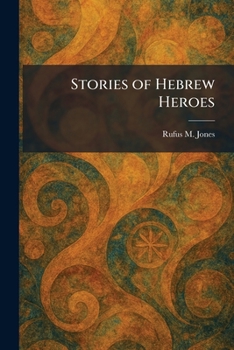
Stories of Hebrew Heroes

"Stories of Hebrew Heroes" is a compelling collection of narratives that brings to life the legendary figures of the Old Testament. Written by the renowned philosopher and theologian Rufus M. Jones, this work explores the lives, trials, and triumphs of the individuals who shaped the spiritual heritage of the Hebrew people. Through a series of engaging retellings, the book highlights the enduring human qualities and divine callings of characters such as Abraham, Joseph, Moses, Joshua, and David.
Moving beyond simple historical accounts, Jones emphasizes the moral and spiritual significance of these characters, portraying them as relatable individuals grappling with faith and leadership. The author's clear and evocative prose makes these ancient stories accessible to a wide audience, offering both historical insight and spiritual depth. The volume serves as an educational resource for understanding biblical history while remaining a timeless exploration of the virtues that define greatness in the face of adversity. "Stories of Hebrew Heroes" remains a classic contribution to religious literature, providing a window into the foundational figures of the Judeo-Christian tradition.
This work has been selected by scholars as being culturally important, and is part of the knowledge base of civilization as we know it. This work was reproduced from the original artifact, and remains as true to the original work as possible. Therefore, you may see the original copyright references, library stamps (as most of these works have been housed in our most important libraries around the world), and other notations in the work.
This work is in the public domain in the United States of America, and possibly other nations. Within the United States, you may freely copy and distribute this work, as no entity (individual or corporate) has a copyright on the body of the work.
As a reproduction of a historical artifact, this work may contain missing or blurred pages, poor pictures, errant marks, etc. Scholars believe, and we concur, that this work is important enough to be preserved, reproduced, and made generally available to the public. We appreciate your support of the preservation process, and thank you for being an important part of keeping this knowledge alive and relevant.
Customer Reviews
ThriftBooks ® and the ThriftBooks ® logo are registered trademarks of Thrift Books Global, LLC
