


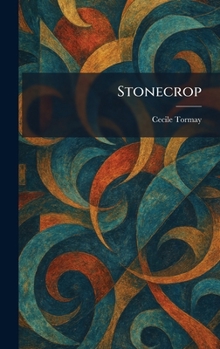
Stonecrop

"Stonecrop" is a haunting and atmospheric novel that transports readers to the rugged, stony landscapes of the Croatian mountains. Written by the acclaimed author Cecile Tormay, the story delves into the stark realities of life among the peasant folk who inhabit this unforgiving terrain. At its heart is a powerful and tragic narrative of love and desire, centered on Yella, a young woman whose life is as beautiful and resilient as the stonecrop flower that clings to the crags.
Tormay's prose captures the raw beauty of the Adriatic hinterland, exploring the deep-seated tensions between tradition and individual passion. The novel offers a profound look at the human spirit's endurance amidst the harshness of nature and the rigid structures of rural society. "Stonecrop" stands as a significant work of early 20th-century European literature, showcasing Tormay's talent for evocative imagery and psychological depth. This moving tale of sacrifice and longing provides a timeless reflection on the burdens of heritage and the pursuit of happiness in a world where survival is a daily struggle.
This work has been selected by scholars as being culturally important, and is part of the knowledge base of civilization as we know it. This work was reproduced from the original artifact, and remains as true to the original work as possible. Therefore, you may see the original copyright references, library stamps (as most of these works have been housed in our most important libraries around the world), and other notations in the work.
This work is in the public domain in the United States of America, and possibly other nations. Within the United States, you may freely copy and distribute this work, as no entity (individual or corporate) has a copyright on the body of the work.
As a reproduction of a historical artifact, this work may contain missing or blurred pages, poor pictures, errant marks, etc. Scholars believe, and we concur, that this work is important enough to be preserved, reproduced, and made generally available to the public. We appreciate your support of the preservation process, and thank you for being an important part of keeping this knowledge alive and relevant.
Customer Reviews
ThriftBooks ® and the ThriftBooks ® logo are registered trademarks of Thrift Books Global, LLC
