


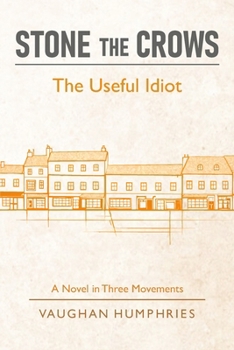
Stone the Crows: The Useful Idiot

Some organisations don't solve problems.
They make them permanent.
The Rural Outreach Committee was never meant to act. It observes, engages lightly, and maintains visibility. Its authority is vague by design. Its language is careful enough to avoid consequence.
That is why it works.
As Tom settles into the role, the town of Thame begins to shift - not through scandal or confrontation, but through consultations, draft frameworks, and phrases that sound reassuring when repeated often enough. A proposed road appears first as a line on a map, then as something harder to question, and finally as something no one quite remembers deciding.
Tom is not instructed.
He is supported. Reassured. Thanked for keeping things tidy.
At first, the work is simple.
Answer emails. Adjust wording. Keep things proportionate.
But his language begins to circulate.
His judgement is quietly relied upon.
And responsibility starts to gather - without ever being assigned.
Nothing feels wrong.
Nothing appears to change.
Until it does.
Meanwhile, his personal life thins - not through betrayal, but through distance, scheduling, and the quiet exhaustion of being endlessly useful.
Stone the Crows: Movement II is a calm, unsettling continuation - a novel about how systems endure, how legitimacy is built through process, and how a man can become central to something he was never asked to control.
Nothing breaks.
Nothing is exposed.
But by the end, Tom understands the most dangerous realisation of all:
He is no longer being watched.
He is being maintained.
Customer Reviews
ThriftBooks ® and the ThriftBooks ® logo are registered trademarks of Thrift Books Global, LLC
